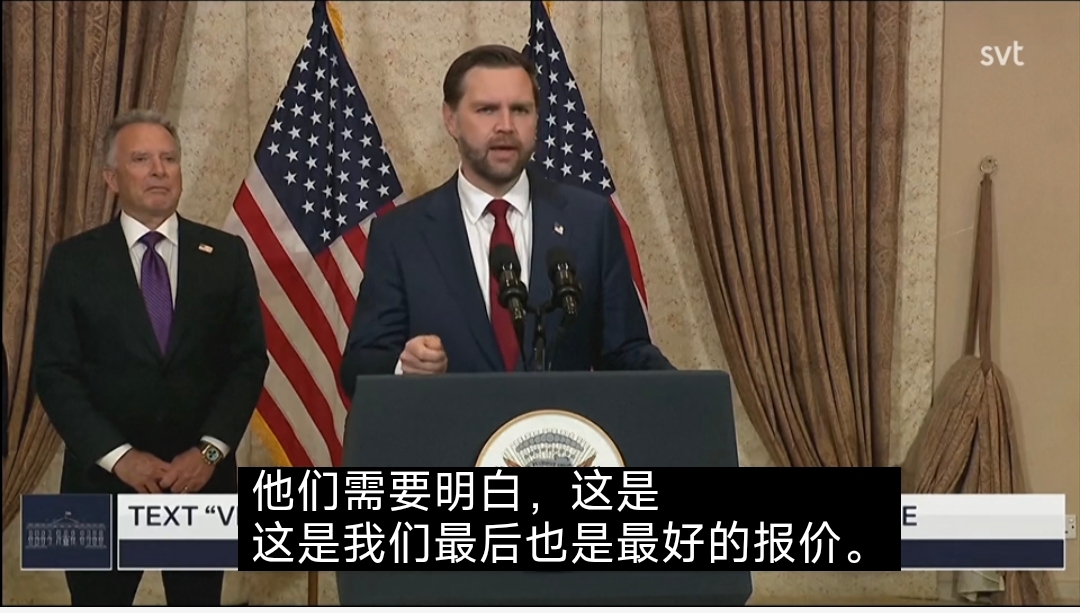
美国与伊朗在巴基斯坦首都伊斯兰堡举行的和平谈判未能达成任何协议。
——“而且我认为,这对伊朗来说是比对美国更糟糕的消息,”美国副总统JD·万斯在现场表示。
当这位率领美国三百人代表团的副总统于周日凌晨面对媒体时,双方已进行了长达21小时的艰苦谈判,但仍无果而终。
——“我们将返回美国,但没有达成任何协议。”万斯表示,并指出核问题是关键分歧之一:
——“我们必须看到他们作出明确承诺,不寻求发展核武器,也不会获取制造核武器的能力。”
“我们的最终最佳方案”
几小时前,伊朗媒体以及伊朗外交部发言人曾表示,谈判将于周日继续进行。
然而,万斯在约五分钟的新闻发布会上似乎否认了这一说法:
——“我们带着一个非常简单的方案离开,这是达成共识的方法——也是我们的最终、最好的提议。接下来就看伊朗是否接受。”
特朗普:无所谓是否达成协议
伊朗外交部随后在社交媒体上发表声明称,外交进程的成功取决于“对方的诚意与善意,放弃过度要求和非法主张,并承认伊朗的合法权利与利益”。
与此同时,美国总统唐纳德·特朗普则表现出相当强硬的态度。他在谈判尚未结束时、前往迈阿密观看UFC赛事途中表示:
——“无论结果如何,我们都会赢。”
北欧简评
《一点回旋余地都没有就撤,谈崩了吗?》
从北欧视角看,这场谈判的“失败”,更像是一场注定难以成功的政治表演。
首先,美国提出“最终最佳方案”,本质上是一种“非谈判式谈判”——即以单边条件要求对方接受,而非在博弈中寻找平衡点。当谈判只剩“接受或拒绝”,外交的空间就已被压缩殆尽。
其次,伊朗强调“合法权利与利益”,而美国强调“绝不发展核能力”,双方在核心问题上几乎没有交集。在这种结构性对立下,21小时的谈判更像是走程序,而非真正的破局尝试。
再看特朗普“无论如何我们都赢”的表态,更凸显出美国国内政治对外交决策的深度绑架——当结果早已被定义,过程自然失去意义。
从北欧一贯推崇的“共识外交”与“渐进式妥协”来看,这场谈判最大的问题不在于失败,而在于从一开始就没有留下回旋的空间。
当外交变成最后通牒,谈崩,其实只是时间问题。
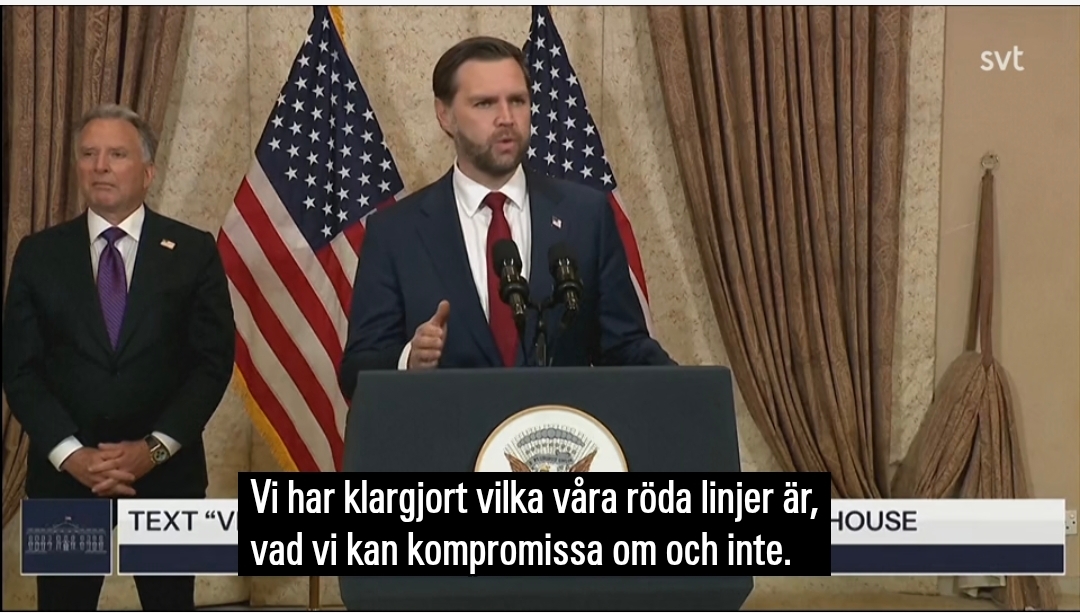
No Room to Maneuver—Did the Talks Collapse from the Start?
International Edition
JD Vance:No Agreement Reached with Iran in Islamabad
The United States and Iran failed to reach any agreement during peace talks held in Islamabad,Pakistan.
“I believe this is significantly worse news for Iran than for the United States,”said U.S.Vice President JD Vance,who led the American delegation on site.
Speaking to the press early Sunday morning after21hours of intense negotiations,Vance confirmed that the talks had ended without results.
“We are returning to the United States without having reached an agreement,”he said,pointing to the nuclear issue as one of the core obstacles.
“We must see a clear commitment that they will not pursue nuclear weapons and will not seek the means to obtain them.”
“Our Final and Best Offer”
Hours earlier,Iranian media and a spokesperson for Iran’s foreign ministry had indicated that negotiations would continue on Sunday.
However,Vance appeared to contradict that during a brief press conference:
“We are leaving with a very simple proposal—a pathway to mutual understanding.It is our final and best offer.Now we will see whether the Iranians accept it.”
Trump:It Doesn’t Matter
Iran’s foreign ministry later stated on social media that successful diplomacy requires“seriousness and goodwill from the other side,the abandonment of excessive demands and unlawful claims,and recognition of Iran’s legitimate rights and interests.”
Meanwhile,U.S.President Donald Trump struck a markedly different tone.Even before the talks concluded,he told reporters on his way to a UFC event in Miami:
“We win no matter what happens.”
Nordic Commentary
No Room Left to Maneuver—Were the Talks Doomed to Fail?
From a Nordic perspective,the outcome of these negotiations appears less like a failure and more like a foregone conclusion.
First,the notion of a“final and best offer”reflects a form of non-negotiation—a one-sided framework in which the other party is left with only two options:accept or reject.In such a setting,the space for diplomacy is effectively eliminated.
Second,the structural divide between the two sides remains profound.Iran insists on its“legitimate rights and interests,”while the United States demands a complete halt to any nuclear ambitions.With such fundamentally incompatible positions,the21-hour negotiation process seems more procedural than substantive.
Third,President Trump’s assertion that“we win no matter what happens”underscores the extent to which domestic political narratives shape foreign policy.When outcomes are pre-defined,the negotiation process risks becoming symbolic rather than meaningful.
Nordic diplomacy traditionally emphasizes consensus-building,incremental compromise,and mutual respect.From this vantage point,the core issue here is not that the talks failed—but that there was little room for success from the outset.
When diplomacy turns into an ultimatum,collapse is not an accident—it is an inevitability.
