清晨六点,本该是北欧丹麦童话世界最安静的时刻。
然而在丹麦北西兰,一声突如其来的撞击,打破了这份秩序与宁静。
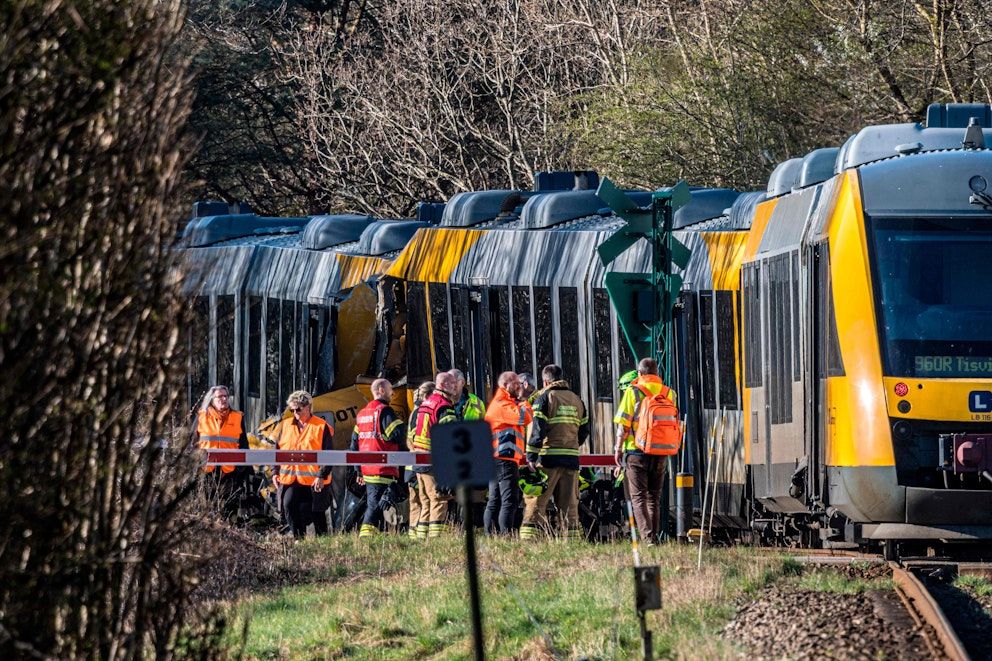
两列火车,在同一条轨道上迎头相撞。
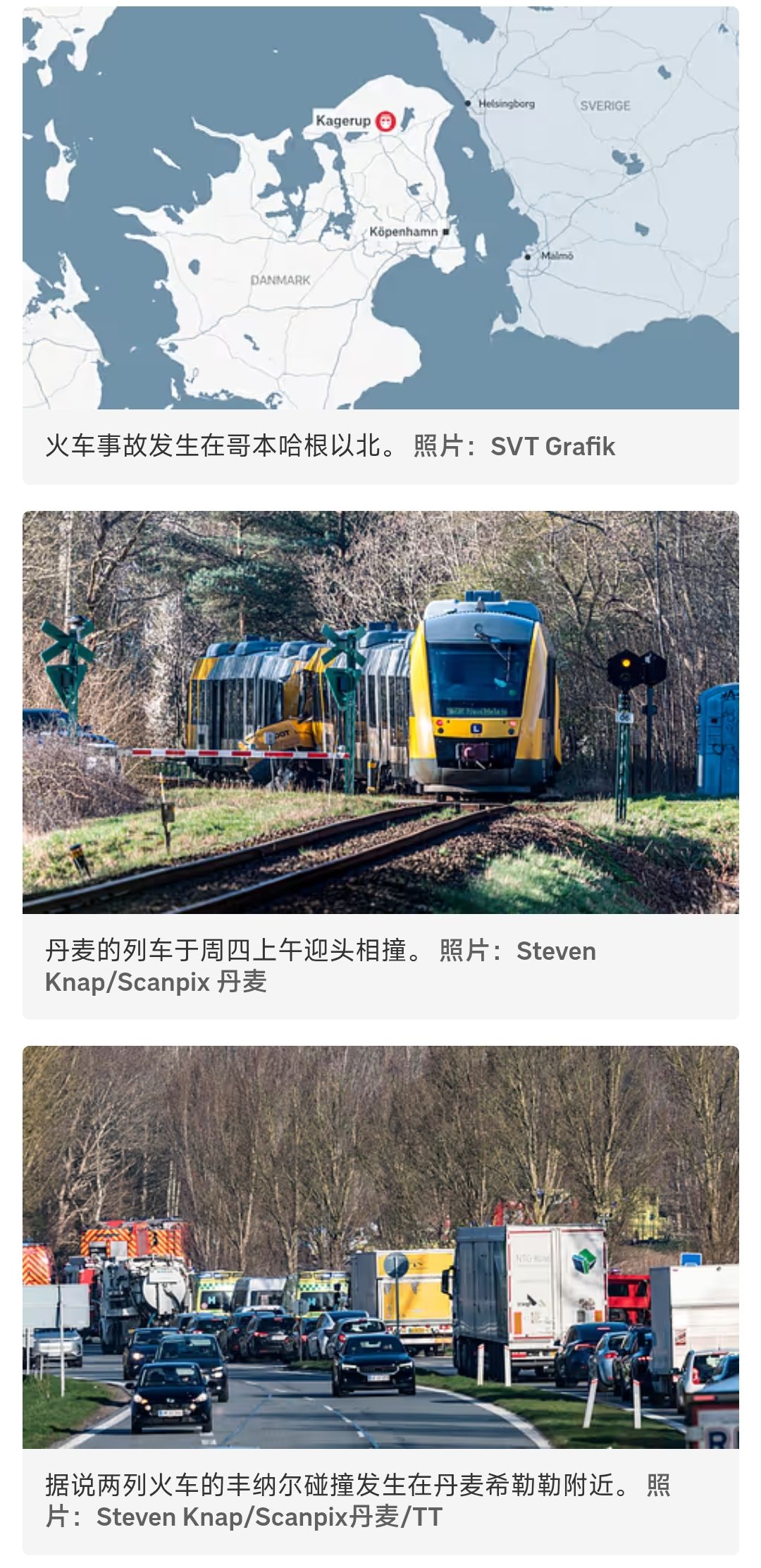
这不仅是一场交通事故,更像是一记警钟——敲在北欧一向引以为傲的高安全铁路体系之上。
一、为什么是“正面相撞”?
在现代铁路系统中,
正面相撞几乎是“最不该发生”的事故类型之一。
因为理论上:
而此次事故却依然发生,并且是在“相对较高速度”下对撞——这意味着:
👉系统层面、调度层面或人为判断,至少有一环出现重大失效
这,才是真正令人警惕之处。

二、北欧“安全神话”的现实边界
北欧国家长期被视为全球交通安全的标杆:
但现实是——
再先进的系统,也无法完全消除“低概率高风险”的事故。
这次事故提醒我们:
三、比事故更重要的是“事故之后”
目前:
真正关键的,是接下来三件事:
1.调查是否公开透明?
是否敢于直面系统缺陷?
2.是否进行制度修复?
是个案,还是结构性问题?
3.是否推动技术升级?
例如更高级别自动控制系统(如ETCS Level2/3)
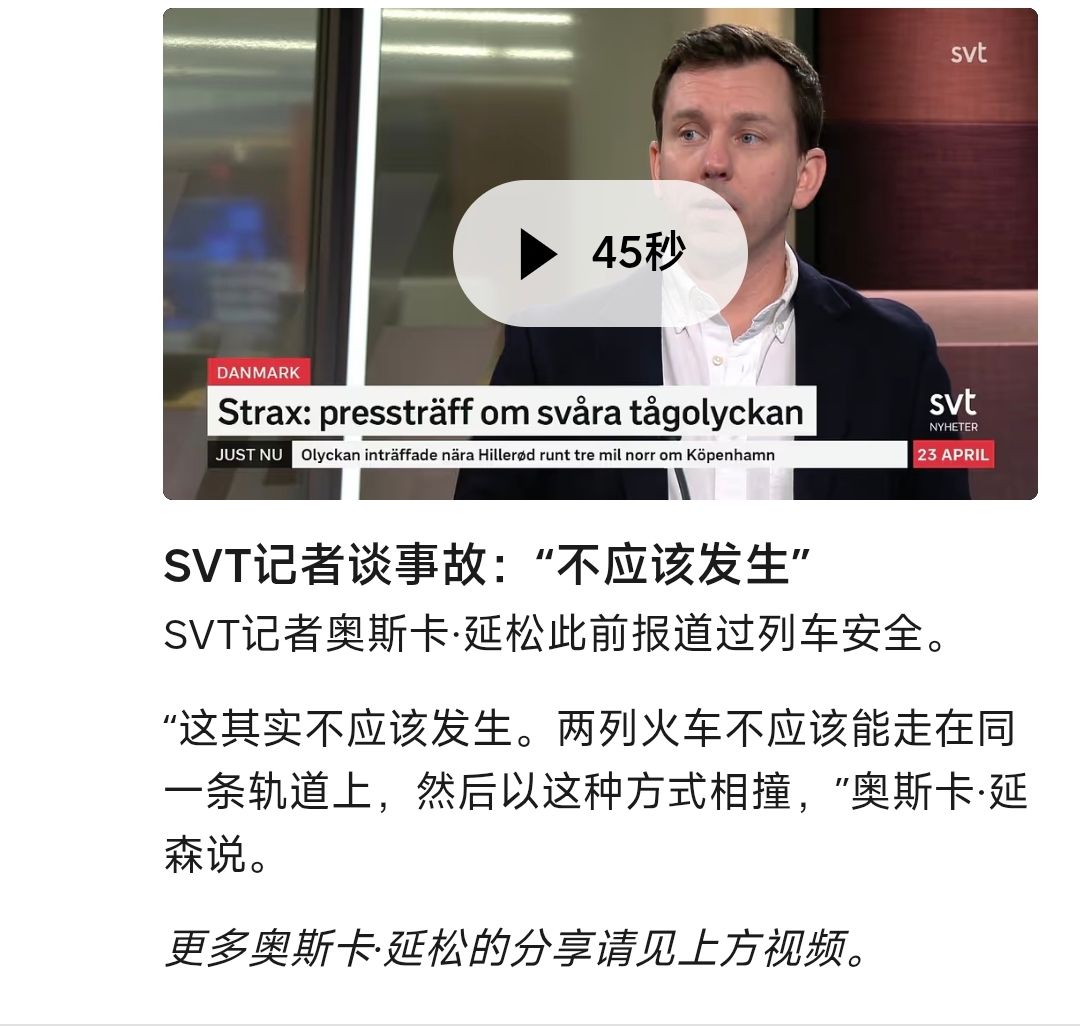
四、从北欧看世界
这起事故不只是丹麦的事。
在全球铁路系统中,包括中国在内:
因此,这起事故的意义在于:
它再次证明——任何国家,都无法“免疫系统性风险”。
在北欧湖畔,我们习惯相信秩序。
但现实提醒我们:
真正的安全,不是“不会出事”,
而是——“出事之后,是否更安全”。
Two trains collide head-on in Denmark,leaving multiple critically injured
Stockholm/Copenhagen—Nordic Chinese Times
At least17people were injured,including four critically,after two trains collided head-on in northern Denmark early Thursday morning,according to Danish authorities and local media.
The accident occurred around6:00a.m.on theGribskov Line(Gribskovbanen)in the North Zealand region,near the town of Hillerød,approximately30kilometers north of Copenhagen.
Incident details
Emergency services reported that:
Emergency response
The Danish Accident Investigation Board has arrived on-site and will conduct a full investigation into the cause of the crash.
Current status
Broader context
Head-on train collisions are rare in modern European rail systems,which rely heavily on automated signaling and centralized traffic control.
The incident is likely to raise questions about:
