《孙子兵法》看天下:特朗普再访华,是为伊朗求和,还是为台湾“谈价”?
——北欧观察者的一点冷思考
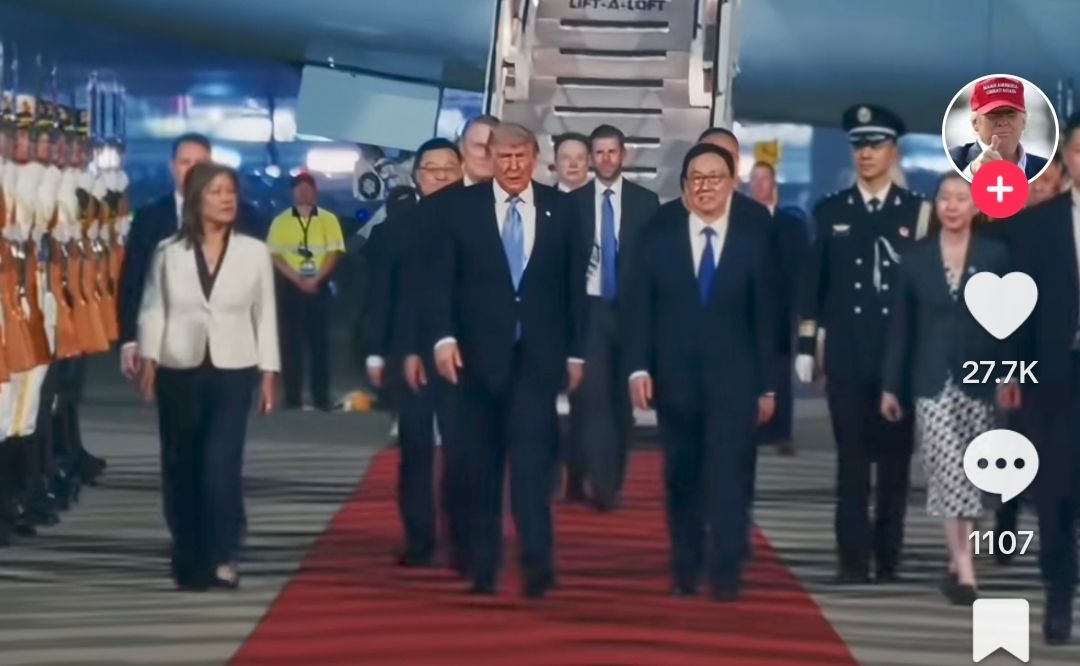
如果用《孙子兵法》去看今天的中美博弈,会发现一个非常有意思的现象:
很多西方媒体仍习惯用“意识形态”“民主对抗”等词汇解释中美关系;但真正懂东方战略的人,会越来越发现——
特朗普式共和党,其实比民主党更接近“现实主义权谋”。
而《孙子兵法》的核心,从来不是情绪,而是:
“上兵伐谋,其次伐交,其次伐兵。”
真正高明的战争,不是开火,而是让对手意识到——“继续打下去,对谁都没好处。”
一、特朗普为何再次访华?
若从《孙子兵法》看,特朗普此行最重要的一点,并不是“访问中国”本身。
而是:
美国正在重新评估“同时打三场战线”的代价。
如今的美国,实际上面临三个巨大消耗:
- 欧洲方向:俄乌冲突长期化;
- 中东方向:伊朗与以色列危机持续升级;
- 亚太方向:台湾问题不断升温。
孙子曰:
“兵久而国利者,未之有也。”
美国国力再强,也不可能无限同时消耗。
特朗普是商人出身,他和传统建制派最大的不同在于:
他首先计算成本。
而不是先谈价值观。
二、伊朗问题:特朗普更怕“第二个阿富汗”
很多人以为特朗普“强硬”。
其实恰恰相反。
特朗普真正害怕的是:
美国再次陷入无法脱身的中东泥潭。
因为共和党内部非常清楚:
伊朗不是伊拉克。
今天的伊朗背后,已经连着:
一旦全面失控,美国通胀、能源、金融、选票都会出问题。
所以从孙子兵法看:
特朗普更像是在“止战求稳”。
孙子曰:
“不战而屈人之兵,善之善者也。”
因此,他需要中国。
因为全世界真正能够同时与:
都保持沟通能力的大国,只剩中国。
这一点,民主党其实也知道。
只是共和党更愿意“交易”。
三、台湾问题:真正的重点不是统一,而是“代价”
很多华人容易把台湾问题看成“立场问题”。
但特朗普看台湾,更像看:
一张战略筹码。
这也是典型的《孙子兵法》思维:
“攻心为上,攻城为下。”
美国真正想做的,并不是立即摊牌。
而是:
因为一旦台海真正开战:
美国会发现:
全球芯片、航运、金融、供应链全部震荡。
而特朗普代表的共和党商人体系,非常清楚:
华尔街最怕的,不是中国崛起;
而是全球市场失控。
因此:
特朗普这次访华,核心很可能不是“摊牌”,而是:
重新定义交易边界。
包括:
这些才是真正的大棋。
四、为什么有人说:“还是习总理解我”
这句话背后,其实有一种非常东方化的政治意味。
因为特朗普和中国高层之间,曾经存在一种特殊的“强人政治互相识别”。
双方都属于:
所以特朗普时代,中美虽然激烈博弈,但双方反而有“可谈性”。
而拜登时代的问题在于:
美国内部权力太碎片化。
国务院、国会、军工集团、情报系统、盟友体系、媒体体系,彼此拉扯。
导致很多时候:
连美国自己都不知道自己真正要什么。
这恰恰违背了《孙子兵法》最重要的一句话:
“上下同欲者胜。”
五、共和党真正想要什么?
若从孙子兵法看,共和党的终极目标可能并不是“彻底打败中国”。
因为他们越来越意识到:
中国已经不是1980年代的中国。
真正的问题变成:
如何在不毁灭全球经济的前提下,延缓中国战略超越。
所以:
这些更多像:
“围而不攻”。
孙子曰:
“穷寇勿迫。”
因为美国也担心:
如果真把世界推入全面对抗,最终代价可能连美国自己也承受不起。
六、观察:真正的大国博弈,从来不是情绪
《孙子兵法》最厉害的一点在于:
它从不把战争理解成“热血”。
而是:
今天的中美关系,其实也一样。
特朗普访华,表面看是外交。
背后真正谈的,可能是:
如何避免世界进入失控时代。
因为所有大国最终都会发现:
真正最难赢的战争,
不是打败别人,
而是避免把整个世界一起拖下去。
Viewing the World Through The Art of War:Was Trump’s China Visit About Peace With Iran—or Bargaining Over Taiwan?
By a Nordic observer watching the shifting balance between Washington and Beijing
Nearly a decade after his first dramatic entrance onto the world stage as U.S.president,appears poised once again to step onto the diplomatic runway toward.
For some in Washington,the symbolism alone is striking.
After surviving political collapse,multiple assassination attempts,legal battles,and the bitterest polarization in modern American history,Trump’s return to global diplomacy raises a larger geopolitical question:
What exactly does the Republican camp want from China now?
Is this about stabilizing the Middle East and avoiding confrontation with Iran?Or is Taiwan becoming the ultimate bargaining chip in a broader strategic negotiation?
Behind the headlines and political theater lies something more profound:a growing realization inside parts of the American establishment that the United States can no longer afford simultaneous long-term confrontation on every front.
A Superpower Facing Strategic Exhaustion
The United States today faces mounting pressure across three geopolitical theaters:
Even for Washington,sustaining all three indefinitely comes at enormous economic and political cost.
Unlike traditional Cold War-era Republicans,Trump’s worldview has always been rooted less in ideology and more in transactional power politics.Allies and rivals alike are often viewed through the lens of leverage,cost,and deal-making.
That difference matters.
Because while the Biden administration framed U.S.-China competition as a struggle between democracies and authoritarianism,Trump’s political instincts have generally leaned toward something more pragmatic:
If conflict becomes too expensive,negotiate.
Iran:The Crisis Washington Cannot Fully Control
Much of the global attention has focused on Taiwan.But many analysts increasingly believe the more urgent concern for Washington may actually be Iran.
The fear inside parts of the Republican establishment is not necessarily that Iran becomes stronger overnight—but that the Middle East spirals into another endless conflict draining American resources,energy markets,and domestic political stability.
Iran today is not isolated Iraq in2003.
It is tied into a wider geopolitical network involving:
Any major military escalation could trigger:
In that context,Beijing becomes unavoidable.
China maintains working relations simultaneously with Iran,Saudi Arabia,Russia,and key European economies—a diplomatic position few other powers currently possess.
That reality may explain why even hardline voices in Washington increasingly recognize that direct communication with Beijing is no longer optional.
Taiwan:Pressure Without War
Taiwan remains the emotional center of U.S.-China rivalry,but beneath the rhetoric,strategic ambiguity still dominates.
For Trump-aligned Republicans,Taiwan is viewed not only as a democratic partner,but also as a critical strategic asset tied to semiconductors,military positioning,and regional influence.
Yet few in Washington truly want a full-scale war in the Taiwan Strait.
The consequences would be immediate and global:
For Wall Street and much of corporate America,the nightmare scenario is not China’s rise itself—but uncontrolled global fragmentation.
That may be why a future Trump-Beijing summit,if it occurs,would likely focus less on ideology and more on defining boundaries:
“Xi Understands Me”:The Politics of Strongman Recognition
One phrase often repeated by Trump supporters is that Chinese leader“understands”Trump better than many American politicians do.
The statement reflects a deeper reality about modern geopolitics.
Both leaders emerged from systems that prize centralized authority,national strength,and long-term strategic positioning.Despite fierce competition between their countries,there has often been a perception that communication between them remained more direct and predictable than the fragmented policymaking processes seen elsewhere in Washington.
Under Biden,critics argued that American foreign policy became increasingly divided among Congress,intelligence agencies,military planners,alliance management,and domestic political pressures.
The result,some observers say,is that U.S.strategy occasionally appears reactive rather than coherent.
The Real Republican Objective
Despite the heated rhetoric,many analysts no longer believe the Republican establishment sees“defeating China”as a realistic objective.
China today is not the China of the1980s.
Instead,the strategic debate inside Washington may now revolve around a different question:
How can the United States slow China’s strategic expansion without collapsing the global economic system both nations depend on?
That explains the simultaneous use of:
The goal may not be immediate confrontation—but sustained containment without catastrophic rupture.
A World Trying to Avoid the Edge
The deeper truth behind a possible Trump return to Beijing may have little to do with diplomatic spectacle.
It may instead reflect a broader recognition shared quietly by all major powers:
No one fully controls the consequences anymore.
Not in the Middle East.Not in the Taiwan Strait.Not in global markets.
And in a world increasingly shaped by economic interdependence,AI competition,energy insecurity,and nuclear deterrence,the greatest strategic victory may no longer be defeating an adversary outright.
It may simply be preventing the entire system from collapsing together.
