北欧时评|静谷送别,又迎普京访华,期待长城相约
Nordic Commentary | A Quiet Farewell,Then Putin’s Arrival:Awaiting a Meeting at the Great Wall
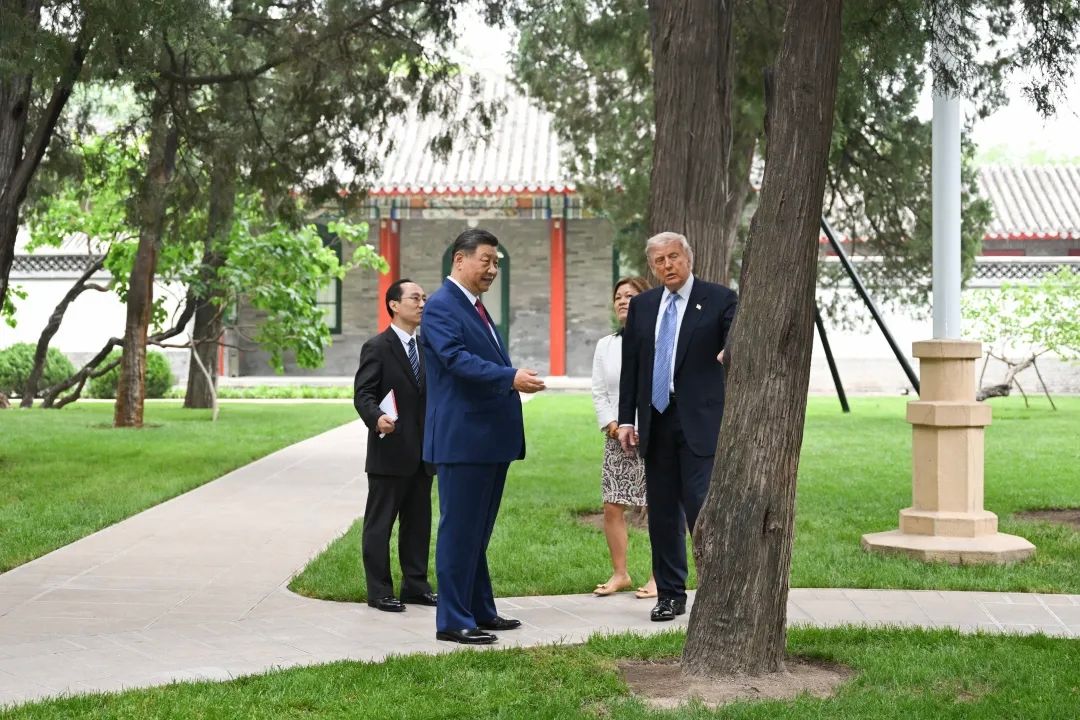
特朗普离开北京了。空军一号穿越云层返回华盛顿,世界媒体连续数日的滚动直播,也终于暂时告一段落。但这场访华留给世界的余韵,却远未结束。从人民大会堂到天坛祈年殿,从台湾问题到伊朗局势,从AI竞争到全球供应链,中美双方实际上完成了一场关于“世界如何避免失控”的深层对话。尤其是天坛之行,更像一次意味深长的文明表达。古柏苍苍,清风穿墙,祈年殿静静矗立。世界媒体在外围熙熙攘攘,甚至因为采访位置一度混乱,而北京最终却用一种极安静的方式结束整个访问。“静谷送别”,这四个字,忽然很像今天世界局势的某种缩影。因为真正的大国外交,很多时候最重要的,并不是谁喊得最大声,而是谁更能让世界重新安静下来。
特朗普此次访华,某种程度上完成了北京近年来最具象征意味的一次“文明外交”。2017年,习近平曾陪同特朗普参观故宫,那一次展示的是中华文明中的“治国秩序”;而这一次来到天坛,则更进一步。天坛并不是普通皇家园林,它是中国古代“敬天”“顺天应时”“天人合一”思想最核心的空间之一。当特朗普站在祈年殿前时,实际上已经不仅仅是美国总统参观古迹,而是西方现代权力政治,短暂进入了东方“天道”文明的语境之中。也正因此,这次天坛外交给世界留下的,并不是锋利的对抗感,反而是一种“竞争仍在继续,但世界不能失控”的气氛。这或许也是为什么,特朗普在返程空军一号上,再次强调台湾问题是绝对红线。因为今天所有主要大国都越来越清楚,一旦台海真正失控,其后果将远超地区冲突本身。那不仅意味着军事风险,更意味着全球芯片体系震荡、AI产业链断裂、国际金融市场动荡,以及全球航运与能源体系受到冲击。
而就在特朗普返美之后,又传出俄罗斯总统普京即将访华的消息。这个时间点,非常耐人寻味。因为世界局势正在进入一种新的“战略重组期”。中东仍未稳定,俄乌冲突长期化,欧洲安全焦虑持续上升,全球资本市场也正在重新寻找安全锚点。而中国,则越来越像那个所有大国都无法绕开的中心节点。从某种意义上说,特朗普刚走,普京又来,世界外交重心正在重新向北京汇聚。
如果说特朗普这次走进天坛,象征的是“天道与秩序”,那么很多人已经开始猜测:普京这次,会不会登上长城?相比天坛的静穆与哲思,长城则完全是另一种气场。它代表边疆、安全、防御、战略纵深与文明边界。尤其是在今天这样一个充满地缘焦虑的时代,长城的象征意味变得格外强烈。北约东扩、俄乌战争、中东动荡、亚太升温,世界似乎重新回到了“安全焦虑时代”。而长城,恰恰是中国古代“守势战略”的最高象征。《孙子兵法》讲:“善守者,藏于九地之下。”真正高明的战略,并不一定是不断扩张,而是守得住、守得稳、守得久。这一点,与今天中俄在面对全球格局变化时的战略思维,其实存在某种深层共鸣。如果未来几天,世界真的看到习近平与普京并肩站在长城之上,那将不仅仅是一幅外交照片,而会成为一张极具时代意味的国际政治图景。因为长城不仅属于中国,它在人类文明记忆里,本身就象征着一个古老文明对于秩序、边界与安全的理解。
过去两百年,世界长期运行在西方节奏之中,金融、工业、资本、科技与军事主导着全球秩序。而这次从天坛到可能的长城外交,人们忽然开始意识到,世界也许正在重新进入一种“东方时间”——一种更强调稳定、克制、长期主义、战略耐性与文明秩序的时间。“静谷送别,长城待客”,北京正在用一种极东方的方式告诉世界:真正的大国,不只是力量强大,更重要的是,能够在世界最喧嚣的时候,依然稳得住。
Donald Trump has now left Beijing.Air Force One crossed the clouds on its way back to Washington,and after days of nonstop live coverage,the world’s media cycle has finally begun to slow.Yet the political and symbolic aftershocks of the visit are far from over.From the meetings at the Great Hall of the People to the visit to the Temple of Heaven,and from discussions surrounding Taiwan and Iran to AI competition and global supply chains,China and the United States effectively conducted a deeper conversation about one central issue:how to prevent the world from sliding into instability.The visit to the Temple of Heaven,in particular,carried an unmistakably civilizational dimension.Ancient cypress trees stood silently as winds moved across the old walls,while the Hall of Prayer for Good Harvests remained calm amid the noise surrounding it.International media crews crowded outside,at times reportedly descending into confusion over access positions,yet Beijing ultimately chose to conclude the entire visit in an atmosphere of unusual quietness.“A farewell in the silent valley”suddenly felt like an apt metaphor for today’s global situation.Because in great-power diplomacy,what matters most is often not who speaks the loudest,but who can calm the world when tensions rise.
Trump’s visit arguably became one of Beijing’s most symbolic examples of“civilizational diplomacy”in recent years.In2017,Xi Jinping accompanied Trump through the Forbidden City,presenting the idea of political order and statecraft within Chinese civilization.This time,however,the setting moved one level deeper.The Temple of Heaven is not simply an imperial complex;it is one of the most important expressions of ancient Chinese concepts such as reverence for Heaven,harmony with nature,and alignment with cosmic order.When Trump stood before the Hall of Prayer for Good Harvests,the moment represented more than an American president visiting a historical site.It symbolized Western modern power politics briefly entering the philosophical space of Eastern“Heavenly Order.”As a result,the lasting impression of the visit was not one of sharp confrontation,but rather the sense that competition will continue while systemic collapse must be avoided.This may explain why Trump,speaking aboard Air Force One during his return flight,once again stressed that Taiwan remains an absolute red line.Today,all major powers increasingly understand that a crisis in the Taiwan Strait would extend far beyond a regional military conflict.It could destabilize semiconductor production,disrupt AI development,shake financial markets,and threaten global shipping and energy systems simultaneously.
Almost immediately after Trump’s return to Washington,reports emerged that Russian President Vladimir Putin is preparing to visit China.The timing is striking.The Middle East remains unstable,the war in Ukraine continues without resolution,Europe’s security anxieties are intensifying,and global capital markets are searching for new strategic anchors.China,meanwhile,increasingly appears to be the one major center that no major power can afford to bypass.In many ways,the sequence itself is revealing:Trump departs,Putin arrives,and the diplomatic center of gravity seems to be moving steadily toward Beijing.
If Trump’s visit to the Temple of Heaven symbolized“Heavenly Order,”many are now asking whether Putin’s upcoming visit could involve the Great Wall.Unlike the philosophical stillness of the Temple of Heaven,the Great Wall carries a very different strategic atmosphere.It represents borders,defense,security,strategic depth,and civilizational boundaries.In today’s geopolitical climate—shaped by NATO expansion,the prolonged Russia-Ukraine war,instability in the Middle East,and rising tensions in the Asia-Pacific—the symbolism of the Great Wall has become particularly powerful.The Great Wall has long stood as the ultimate symbol of China’s ancient defensive strategy.The Art of Warteaches that“the greatest defenders hide themselves beneath the deepest layers of the earth.”The highest form of strategy is not endless expansion,but the ability to endure,stabilize,and hold firm over time.In this sense,the strategic mentality embodied by the Great Wall resonates strongly with how both China and Russia increasingly view today’s changing international order.If the world were to see Xi Jinping and Vladimir Putin standing together atop the Great Wall in the coming days,it would become far more than a diplomatic photograph.It would instantly become one of the defining geopolitical images of this era,symbolizing a broader vision of order,security,and civilizational resilience across Eurasia.
For more than two centuries,the world largely operated according to Western rhythms driven by finance,industry,technology,military power,and capital.Yet after the symbolism of the Temple of Heaven—and perhaps soon the Great Wall—many observers are beginning to sense that global politics may be entering a different kind of historical tempo:one shaped more by stability,restraint,long-term thinking,strategic patience,and civilizational continuity.“A quiet farewell in the valley,and a welcome at the Great Wall”may ultimately become Beijing’s subtle message to the world.A truly great power is not defined only by strength,but by its ability to remain steady while the rest of the world grows increasingly noisy.