编者语Editorial Note
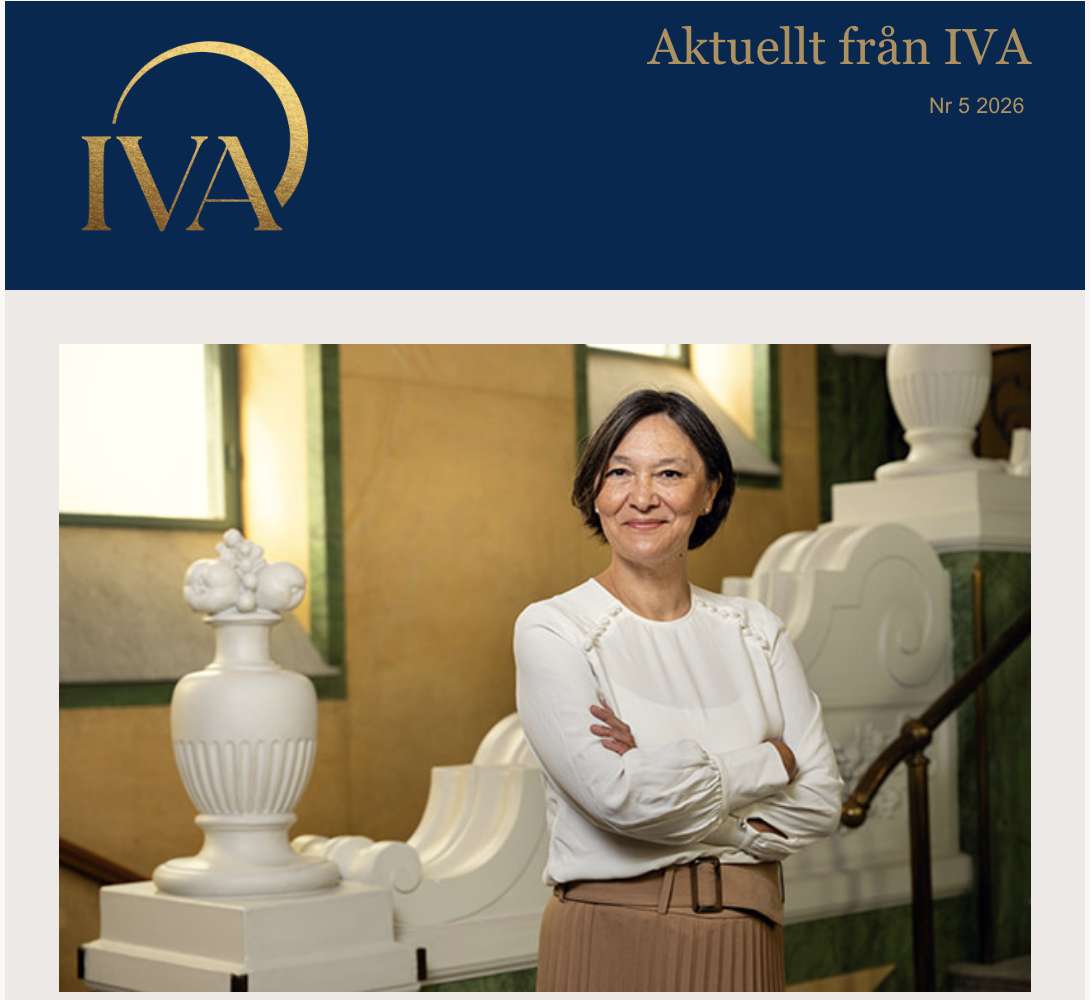
今天,瑞典皇家科学院例行向我发送了一封邮件。打开一看,新年北欧开篇文章,出自IVA首席执行官、教授Sylvia Schwaag Serger(Kungliga Ingenjörsvetenskapsakademien,瑞典皇家工程科学院)。
读罢全文,我不由想起窗外的洛神湖。
清晨薄雾未散,湖面如镜,仙鹤踱步其间,野鸭列队而行——一种无需指挥的秩序,一种无需宣示的平衡。
那一刻我忽然明白:真正的力量,从来不是对抗,而是稳定;不是扩张,而是自持;不是压迫,而是共生。
正如欧洲今日所面对的世界格局——夹在中美之间,寻找自身定位——其实更需要回到文明本身的初心:以理性构建秩序,以合作化解冲突。
本文由此展开。既是对欧洲战略焦虑的回应,也是一次来自北欧湖畔的文明自省。
Earlier today,I received one of the regular newsletters from Sweden’s Royal Academy of Engineering Sciences.Opening it,I found the first Nordic policy article of the year,written by Sylvia Schwaag Serger,Professor and CEO of IVA(Kungliga Ingenjörsvetenskapsakademien).
After reading it,my thoughts drifted to Råstasjön—the lake outside my window.
Morning mist still hovered above the water.Cranes walked calmly along the shore,wild ducks moved in quiet formation.No commands,no slogans—only an invisible order,a natural balance.
At that moment,I realized:true strength is not confrontation,but stability;not expansion,but restraint;not domination,but coexistence.
This is precisely the crossroads Europe now faces—caught between China and the United States,searching for its strategic identity.Perhaps what is most needed is a return to civilizational fundamentals:building order through reason,and resolving tension through cooperation.
This commentary grows from that reflection—both a response to Europe’s strategic anxiety,and a moment of civilizational introspection from a Nordic lakeside.
---

《欧洲应放弃偏见,与“和平之君王”中国同行》
Europe Should Abandon Prejudice and Walk Together with China,a Nation of Peaceful Leadership
在当前复杂的地缘政治环境下,欧洲正面临一个根本性问题:
In today’s increasingly complex geopolitical environment,Europe faces a fundamental question:
它是要成为大国博弈中的“夹层地带”,
Will it remain a buffer zone caught between major powers,
还是成为一个拥有战略自主性的文明主体?
Or will it emerge as a strategically autonomous civilizational actor?
一、战略困境
I.Europe’s Strategic Dilemma
欧洲如今被置于中美两极之间。
Europe finds itself positioned between China and the United States.
在科技、金融、产业与安全领域,美国仍然具有主导力;
In technology,finance,industry,and security,the United States maintains structural dominance;
而中国则在制造规模、供应链完整性与市场容量方面形成全球性影响。
Meanwhile,China has established global influence through manufacturing scale,supply chain completeness,and market capacity.
在这种格局下,欧洲的焦虑可以理解。
Europe’s anxiety under such a structure is understandable.
但焦虑不应转化为保护主义冲动。
Yet anxiety must not turn into protectionist reflexes.
如果“Made in Europe”最终变成对非竞争性企业的庇护,而不是对创新的激励,那么欧洲将削弱自身活力。
If“Made in Europe”becomes a shelter for non-competitive firms rather than an incentive for innovation,Europe risks weakening its own vitality.
二、战略资本,而非阵营对抗
II.Strategic Capital,Not Bloc Confrontation
欧洲真正的力量并不来自阵营站队,而来自“战略不可替代性”。
Europe’s real strength does not lie in bloc alignment,but in strategic indispensability.
欧洲在高端医疗设备、精密制造、工业自动化、绿色科技等领域拥有深厚积累。
Europe possesses deep strengths in advanced medical technology,precision engineering,industrial automation,and green innovation.
正如报告所指出,中国和美国在多个关键领域都依赖欧洲产品。
As recent reports highlight,both China and the United States rely on European imports in multiple critical sectors.
这意味着欧洲拥有谈判筹码。
This means Europe holds negotiation leverage.
但筹码的运用,应当是理性的,而不是情绪化的。
But leverage must be exercised rationally,not emotionally.
三、与中国合作,不等于价值让渡
III.Cooperation with China Is Not Value Concession
中国的产业升级,并非针对欧洲。
China’s industrial upgrading is not directed against Europe.
中国的技术发展,并非要取代欧洲文明。
China’s technological advancement is not designed to replace European civilization.
中国过去四十年的开放实践证明:
China’s forty years of reform and opening-up demonstrate that:
合作可以共赢。
Cooperation can be mutually beneficial.
欧洲企业在中国获得巨大市场机会;
European firms have gained vast market opportunities in China;
中国企业也在欧洲投资、研发与创造就业。
Chinese companies invest,innovate,and create jobs in Europe.
如果欧洲以意识形态预设为前提削弱合作,
If Europe weakens cooperation based on ideological preconditions,
那损失的不仅是经济利益,
It will lose not only economic opportunities,
更是未来产业共建的可能性。
But also the possibility of co-building future industries.
四、多极时代需要智慧
IV.A Multipolar World Requires Wisdom
世界已经进入多极时代。
The world has entered a multipolar era.
中美竞争是现实,
US–China competition is a reality,
但这并不意味着欧洲必须被动选边。
But this does not mean Europe must passively choose sides.
真正成熟的战略思维,是在竞争与合作之间寻找平衡。
Strategic maturity lies in balancing competition and cooperation.
欧洲完全可以:
Europe can simultaneously:
维护规则型国际秩序
Uphold a rules-based international order
坚持自由贸易原则
Defend free trade principles
同时深化与中国在绿色转型、医疗创新、智能制造等领域的合作
While deepening cooperation with China in green transition,medical innovation,and smart manufacturing
五、讨论
V.Conclusion
欧洲太重要,中国不会放弃与欧洲合作。
Europe is too important for China to abandon cooperation.
中国同样太重要,欧洲也不应忽视现实。
China is equally important,and Europe should not ignore that reality.
放弃偏见,并不意味着放弃原则;
Abandoning prejudice does not mean abandoning principles;
加强合作,也不等于丧失自主。
Strengthening cooperation does not mean losing autonomy.
在新的全球格局中,
In the emerging global order,
真正的影响力来自智慧与理性。
True influence stems from wisdom and rationality.
欧洲若能以开放姿态与和平发展的中国合作,
If Europe chooses to engage with a peaceful and developing China in an open-minded way,
不仅将增强自身竞争力,
It will strengthen its own competitiveness,
也将为全球稳定与繁荣作出贡献。
And contribute to global stability and prosperity.
原文
一、原文中文翻译
作者:Sylvia Schwaag Serger
身份:IVA首席执行官、教授(Kungliga Ingenjörsvetenskapsakademien,瑞典皇家工程科学院)
亲爱的IVA朋友们:
今天是俄罗斯对乌克兰发动全面入侵四周年。乌克兰人民展现出的抵抗精神令人敬佩。除了对乌克兰独立、主权和领土完整的完全尊重之外,任何立场都是不可接受的。乌克兰的未来应由乌克兰人民自己决定。
本周,European Commission预计将公布《工业加速法案》(The Industrial Accelerator Act),该立法旨在推动工业领域的气候转型,并增强欧洲竞争力。该提案早在去年就已预告,其中欧盟工业委员Stéphane Séjourné提出的“Made in Europe”理念预计将成为核心内容之一——同时也是争议最大的部分。
Séjourné主张推出欧洲版的“Made in China”或“Buy American”。更具体而言,他希望在欧盟公共采购中优先考虑欧洲企业:
“只要公共资金在欧洲被使用,它就必须促进欧洲的生产和就业。”
当前,欧洲正被夹在中国与美国的双重主导之间——无论是技术、经济还是防务领域。中国和美国在扶持本国市场方面都并非完全遵循自由竞争规则。那么欧盟该如何在现实中定位自己?我们又该如何看待“Made in Europe”?
欧盟成员国在这一提议上明显分裂。包括瑞典、爱尔兰、波罗的海国家、丹麦和荷兰在内的一些国家持怀疑态度,警告这些“保护主义倾向”将增加监管负担,并可能迫使投资流出欧洲。另一些国家则认为,这是应对新现实的务实与战术性选择。
我不认为放弃基于规则的自由贸易体系是长期可行的战略路径。但与此同时,当世界已经发生如此巨大的变化,我们也无法继续沿用昨日的游戏规则。例如,在国防采购中优先考虑欧洲产品,如果管理得当,不仅有助于经济,也在战略与安全层面合情合理。
但当公共部门采购云服务,而欧洲又缺乏可信供应商时,该怎么办?我们又如何确保“Made in Europe”不会变成对缺乏竞争力企业的补贴,从而导致产品质量下降、经济增长放缓?
夹在中美之间,欧洲正在寻找自己的角色。在德国与法国的公共讨论中,一个逐渐浮现的观点是:欧洲可以向印度、韩国、澳大利亚这些“中等强国”(middle powers)学习。这些国家成功利用自身的战略资本,在国际政治中获得了显著影响力——关键在于掌握对中美都不可或缺的领域、产品、市场或技术。
那么,欧盟的战略资本在哪里?我们又该如何利用它?
你不必成为世界上最强大的国家才能拥有影响力。只需要足够聪明与战略清晰。
地缘战略欧洲工作组(Geostrategic Europe Taskforce)近期发布报告《重新学习权力的语言》(Re-learning the language of power),指出中国在约40个领域依赖欧盟进口,美国在约70个领域依赖欧盟进口,包括胰岛素、医疗技术、农业机械、造纸等。
了解这些具体依赖关系固然重要,也可以战术性使用。但从更高层面看,这只是第一步。拥有独特优势并不等于能够有效维护自身利益——这还需要政治意志,甚至在某些情况下采取进取性行动。
现实中,这意味着我们必须减少对欧洲脆弱性与瓶颈的过度关注,而应从安全、韧性与长期战略利益出发,有目标地优先发展贸易伙伴、技术方向与投资布局。
事实上,对中美而言,欧洲过于重要,以至于它们都不会选择全面对抗或彻底放弃合作。这是一种我们不仅需要意识到、还应主动运用的现实,尤其要通过投资自身优势领域来强化这种地位。
科学、技术与政治的联系从未如此紧密。我们必须在直面现实世界的同时,不忘我们希望塑造的未来世界:长期坚持基于规则的国际秩序与自由贸易;同时清醒认识自身的战略不可替代性,并在新格局中灵活应对。
如果欧洲能够务实而战术性地运用贸易政策,在当今地缘政治环境中,欧洲依然拥有发挥影响力的空间。
感谢你成为IVA网络的一员!
——Sylvia Schwaag Serger教授
IVA首席执行官
