“昨天,我给意大利总理发了条短信。”
3月25日,博鳌亚洲论坛2026年年会期间,意大利经济发展部原副部长、纽约大学(上海)金融学特聘教授米凯莱·杰拉奇接受长安街知事(微信ID:Capitalnews)专访时,提到了一条特殊的短信。
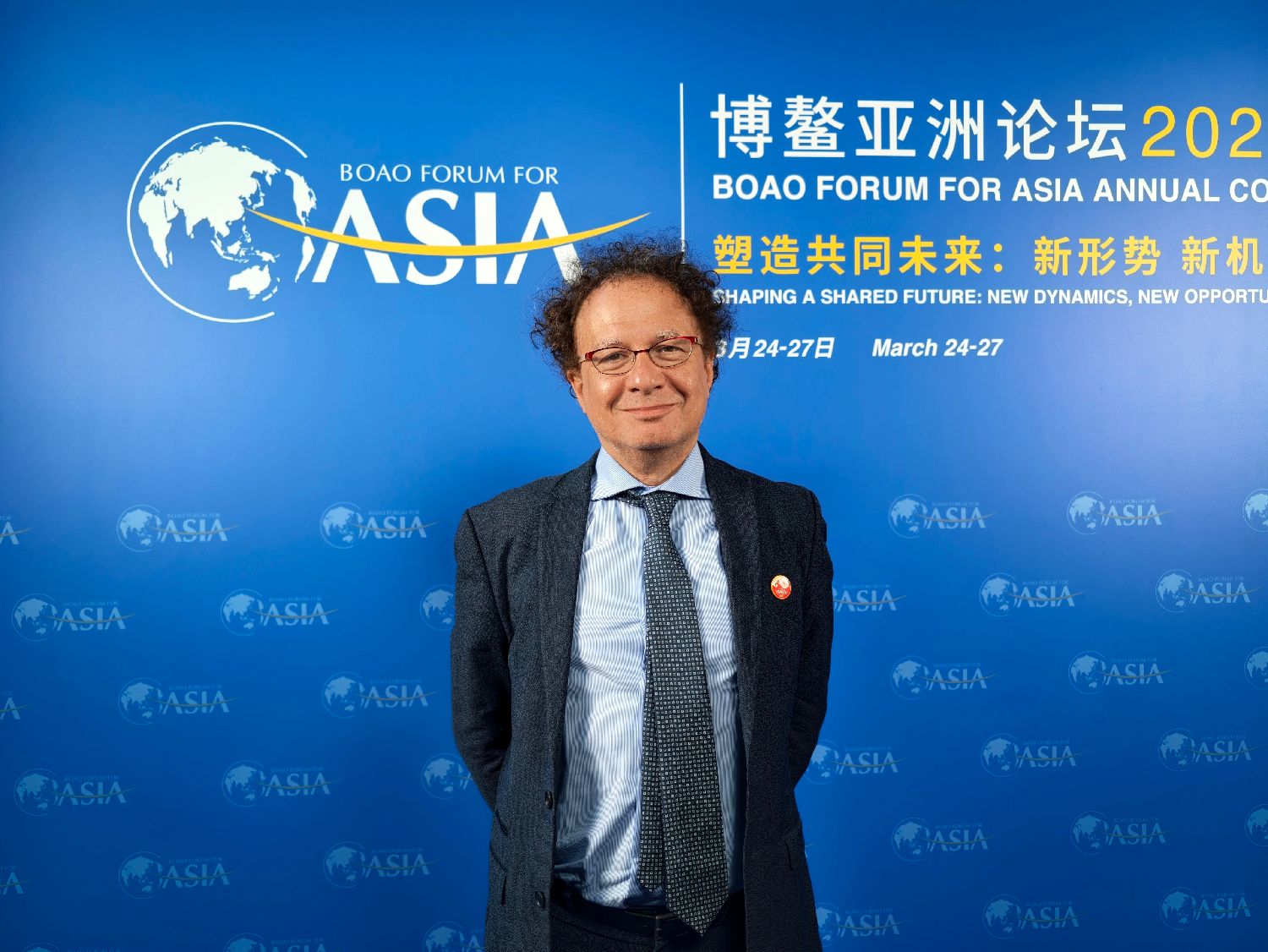
杰拉奇接受长安街知事专访
今年的博鳌亚洲论坛依旧吸引了不少欧洲前政要和学者,中欧关系自然成了绕不开的话题。不少场合都能看到来自欧洲的嘉宾——芬兰前总理阿霍、意大利前总理真蒂洛尼、法国前总理拉法兰……
谈到去年以来欧洲领导人接连访华,杰拉奇说:“欧洲终于意识到,中国是重要的合作伙伴。尽管在过去一段时间里,一些欧洲领导人闭目塞听,根本没有用心思考局势,也没有做出正确的判断。”
杰拉奇谈及意大利政局,他说自己昨天还给意大利总理梅洛尼发了条短信:“我告诉她,你得看清世界的发展趋势,看清中国正在做的事。你不必照搬中国的模式,也不必强迫自己喜欢,但你必须去研究,然后从中筛选出适合本国发展的经验——睁开眼睛吧!”
聊及此,这位意大利前政要挥舞手臂、充满激情。采访的酒店大堂内不少人侧目,杰拉奇毫不在意。
他继续说:“过去几年,一些欧洲领导人动辄给中国扣上‘制度性对手’的帽子,鼓吹‘脱钩’‘去风险’之类的论调,甚至还指责中国与俄罗斯开展贸易往来——美国在全球多地发动军事打击,各国不还是照样和美国做生意?为什么中国就不能和俄罗斯保持贸易关系?”
“欧洲一些领导人以往的做法,极容易让人产生不可靠、不友好的观感,自然难以建立信任。”杰拉奇认为,欧洲领导人应该用实际行动赢得中国的信任,而非被所谓的“盟友”美国逼到了墙角,才想起投入中国的怀抱。
去年,美国特朗普政府对包括盟友在内的世界多国挥动关税大棒,保护主义、单边主义抬头。在本届论坛上,谈及中欧关系时,不少嘉宾都难掩对中国的期待。
法国前总理、展望与创新基金会主席拉法兰接受长安街知事(微信ID:Capitalnews)专访时坦言,美国不再为欧洲遮风挡雨,美欧同盟已不再是理所当然,欧洲正深陷迷茫。
“在我60年的政治生涯中,从未见过法国与美国的关系像如今这般疏远。美欧之间的联结和信任正在瓦解,特朗普总统甚至言辞激烈地称欧洲为‘敌人’。我希望中国朋友能理解,美欧摇摇欲坠的战略同盟让欧洲各国陷入了怎样的困惑。”拉法兰说。
“如今,欧洲清晰地认识到,与中国建立战略关系十分必要。”拉法兰建议道,“中国可以把握这一契机,助力我们应对未来的种种挑战。”他以今年2月中旬中德法外长在慕尼黑会晤举例说,欧洲需要新的领导力,而中国能够助力欧洲形成这样的政治领导力。
“欧洲需要做的是为自身树立清晰的形象,尤其是在与中国的对话中展现出统一的姿态。而中国拥有东方智慧,外交手段细腻,定能助力欧洲凝聚起这份领导力。”拉法兰说。
“I Sent a Text Message to the Italian Prime Minister,Asking Her to Open Her Eyes and Learn from China”
By Li Zhihong,Chang’an Street Insight
“Yesterday,I sent a text message to the Italian Prime Minister.”
On March25,during the2026Annual Conference of the Boao Forum for Asia,Michele Geraci—former Undersecretary of State at Italy’s Ministry of Economic Development and Adjunct Professor of Finance at NYU Shanghai—mentioned this unusual message in an exclusive interview withChang’an Street Insight(WeChat ID:Capitalnews).
This year’s Boao Forum once again attracted many former European politicians and scholars,making China–Europe relations an unavoidable topic.European guests were present at many events,including former Finnish Prime Minister Esko Aho,former Italian Prime Minister Paolo Gentiloni,and former French Prime Minister Jean-Pierre Raffarin.
Speaking about the frequent visits to China by European leaders over the past year,Geraci said:
“Europe has finally realized that China is an important partner.For some time in the past,certain European leaders turned a blind eye,failed to think carefully about the global situation,and made incorrect judgments.”
Discussing Italian politics,Geraci revealed that he had sent a message to Italian Prime Minister Giorgia Meloni just the day before:
“I told her that she must clearly understand global development trends and see what China is doing.You don’t have to copy China’s model,nor force yourself to like it,but you must study it carefully and select the experiences that suit your country’s development—open your eyes!”
As he spoke,the former Italian official gestured passionately,drawing attention from people in the hotel lobby,though he seemed unconcerned.
He continued:
“In recent years,some European leaders have hastily labeled China as a‘systemic rival,’promoting narratives such as‘decoupling’and‘de-risking,’and even criticizing China for maintaining trade relations with Russia.Yet the United States has launched military strikes in many parts of the world,and countries still do business with the U.S.Why shouldn’t China maintain trade relations with Russia?”
“Such approaches by some European leaders easily create an impression of unreliability and unfriendliness,making it difficult to build trust,”Geraci argued.He believes European leaders should earn China’s trust through concrete actions,rather than turning to China only after being pressured by their so-called ally,the United States.
Last year,the Trump administration in the United States imposed tariffs on many countries,including its allies,signaling a rise in protectionism and unilateralism.At this year’s forum,many participants expressed strong expectations for China when discussing China–Europe relations.
Jean-Pierre Raffarin,former French Prime Minister and President of the Foundation for Prospective and Innovation,toldChang’an Street Insightin an interview:
“The United States no longer shelters Europe as it once did.The transatlantic alliance is no longer a given,and Europe is deeply confused.”
“In my60-year political career,I have never seen relations between France and the United States as distant as they are today.The bonds and trust between Europe and the U.S.are eroding,and President Trump has even harshly referred to Europe as an‘enemy.’I hope our Chinese friends can understand the level of uncertainty Europe is facing as this strategic alliance falters,”Raffarin said.
“Today,Europe clearly recognizes the necessity of establishing a strategic relationship with China,”he suggested.“China can seize this opportunity to help us address future challenges.”He cited the trilateral meeting of the foreign ministers of China,Germany,and France in Munich in mid-February as an example,noting that Europe needs new leadership—and China can help foster such political leadership.
“What Europe needs to do is define a clear identity for itself,especially by presenting a unified stance in its dialogue with China.China,with its Eastern wisdom and nuanced diplomacy,can certainly help Europe consolidate this leadership,”Raffarin added.
北欧时报简评
从北欧视角来看,这场对话折射出一个更深层的变化:欧洲正在从长期依赖跨大西洋体系的“确定性”,走向一个充满不确定性的多极世界。无论是杰拉奇的直言,还是拉法兰的反思,都说明欧洲内部已经开始重新审视自身在全球格局中的位置。
但问题的关键,并不在于简单“向中国学习”,而在于欧洲如何重新建立自己的战略自主性。对于以创新驱动、制度稳定著称的北欧国家而言,真正的挑战是:在价值观、安全议题与经济利益之间,找到新的平衡点。
中国代表着规模、效率与国家协调能力,而欧洲则拥有制度优势、科技积累与规范性影响力。未来中欧关系的走向,很大程度上取决于双方能否超越意识形态标签,在绿色转型、生命科学、数字治理等领域建立务实、可持续的合作。
因此,“睁开眼睛”的真正含义,也许不是选择立场,而是在一个更复杂的世界中,看清现实、认清自身,并找到属于自己的道路。
Brief Commentary(Nordic Perspective)
From a Nordic perspective,this interview reflects a deeper structural shift in global geopolitics:Europe is no longer operating within a stable transatlantic certainty,but is instead entering a phase of strategic ambiguity.Voices like Geraci and Raffarin reveal a growing recognition within Europe that engagement with China is not merely optional,but increasingly necessary.
However,the key challenge lies not in“learning from China”in a simplistic sense,but in redefining Europe’s own strategic autonomy.For Europe—and particularly for smaller,innovation-driven Nordic countries—the real question is how to balance values,security,and economic interests in a multipolar world.
China offers scale,speed,and state-driven coordination;Europe offers institutional stability,technology,and normative power.The future of China–Europe relations will likely depend on whether both sides can move beyond ideological framing and build pragmatic,trust-based cooperation—especially in areas such as green transition,life sciences,and digital governance.
In this sense,“opening one’s eyes”may be less about choosing sides,and more about learning to see a more complex world clearly.
