略谈六四:一个浅薄民主意识的革命,却忽略了中华文明的大一统基因
每到六月,总有人提起1989年。
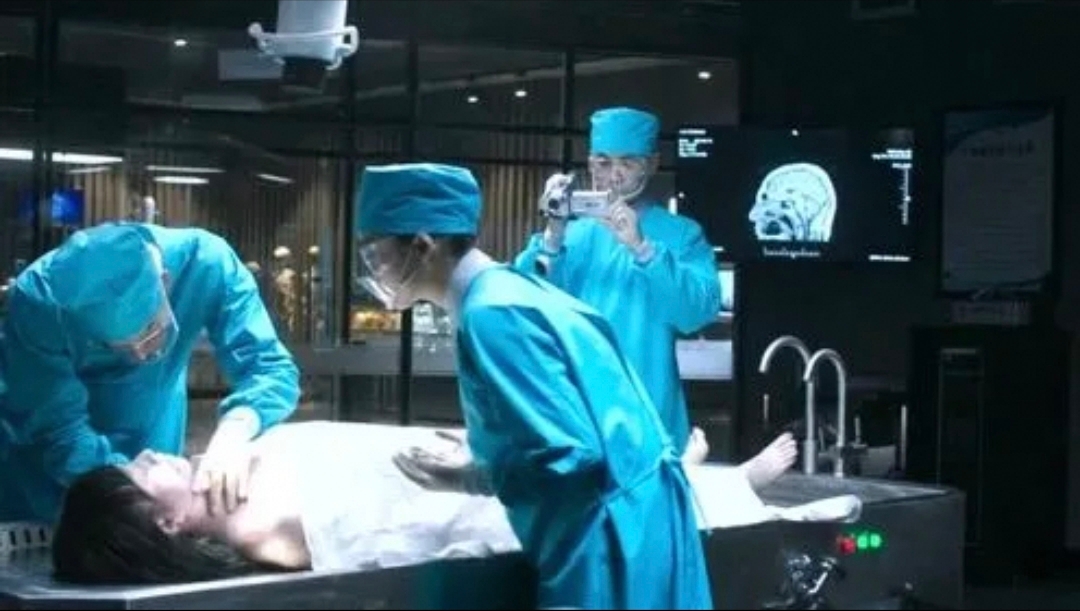
我也不例外,因为哪一年我正在尸体房学解剖,翻人体经络。
三十多年过去了,关于那场风波的讨论从未停止。
有人将其视为中国民主化进程的重要尝试,有人将其视为中国改革开放道路上的一次重大挫折。而站在今天的历史高度重新审视那场运动,我们或许应该提出一个更深层的问题:
那些年轻而热血的理想主义者,是否真正理解了中国?
他们追求民主,却未必理解中国文明。
他们追求自由,却未必理解中国历史。
他们向往西方,却未必理解中华民族数千年来赖以生存发展的根本逻辑。
因为中国从来不是一个普通国家。
中国是一个文明。
西方国家的历史,大多是从分裂走向联合。
而中国的历史,则是在统一中寻找秩序。
从秦始皇统一六国开始,中国便确立了“大一统”的文明基因。
统一文字,统一度量衡,统一货币,统一道路。
从那一刻开始,“天下归一”便成为中华文明最深层的政治密码。
此后两千多年,无论王朝如何更替,无论战火如何蔓延,无论外敌如何入侵,中国人始终相信:
分裂意味着灾难;
统一意味着希望。
秦皇汉武、唐宗宋祖、康乾盛世。
他们留在历史中的最大功绩,并不是建立了什么民主制度,而是在广袤土地上维持统一,在漫长岁月中延续文明。
对于西方世界而言,自由是政治的起点。
对于中国而言,秩序往往才是生存的前提。
这是两种不同文明所形成的历史经验。
1989年的许多年轻人,受到西方自由主义思潮影响,认为只要拥有民主制度,中国便能够自动走向繁荣与进步。
然而历史从来没有如此简单。
仅仅几年之后,苏联解体。
东欧剧变。
南斯拉夫陷入血腥内战。
一些国家在所谓民主化进程中实现了制度转型,也有一些国家在混乱与分裂中失去了发展的机会。
历史告诉我们:
民主不是万能药。
选举不是目的地。
制度移植更不是现代化的捷径。
对于一个拥有十四亿人口、五十多个民族、数千年连续文明传统的国家而言,国家治理远比政治口号复杂得多。
一个国家真正需要的,不仅是自由,更是秩序;
不仅是权利,更是责任;
不仅是表达,更是建设。
过去三十多年,中国的发展已经给出了自己的答案。
数亿人口摆脱贫困。
世界最大的高铁网络建成。
完整工业体系形成。
科技创新不断突破。
从积贫积弱走向世界舞台中央。
这一切未必符合西方理论家的预设,却符合中国自身的发展逻辑。
这并不意味着中国不需要改革。
也不意味着中国不需要法治、公平与监督。
恰恰相反。
一个强大的国家,更需要不断完善治理体系。
一个成熟的文明,更需要不断吸收人类优秀成果。
但改革必须建立在国家统一和社会稳定基础之上。
这是中国历史反复证明的规律。
尤其值得一提的是,那些三十多年前离开中国、至今仍活跃于欧美各国的所谓“民主斗士”。
历史已经翻过了一页又一页。
中国早已不是他们离开时的中国。
然而有些人依然停留在旧时代的话语体系中。
他们不断重复三十多年前的口号,却很少认真研究今天的中国。
他们习惯于批判中国,却对中国取得的发展视而不见。
他们怀念过去,却错过了现实。
事实上,真正的勇气并不是永远停留在对抗之中。
真正的智慧,是学会与历史和解。
中华民族从来不是一个排斥异见的民族。
中华文明最大的力量之一,恰恰在于包容与融合。
无论曾经持有什么观点,无论曾经站在哪一个阵营,只要愿意为民族复兴贡献力量,只要愿意为国家建设添砖加瓦,都应当被尊重。
因此,我想对那些仍然漂泊海外、沉浸于旧时代政治叙事的人说一句:
该醒醒了。
时代已经变了。
中国已经变了。
世界也已经变了。
如果有一天,你们愿意放下历史包袱,重新认识自己的祖国,那么请记住:
祖国依然在那里。
祖国的大门依然敞开。
祖国,也依然需要你。
因为对于一个五千年文明而言,最重要的从来不是谁赢了过去的争论,而是谁愿意参与未来的建设。
历史终将远去。
民族仍将前行。
而中华文明的故事,也必将在统一、发展与复兴的道路上继续书写下去。
Reflections on June Fourth:A Movement Shaped by a Shallow Democratic Consciousness While Overlooking China's Civilizational Tradition of Unity
Every June,memories of 1989 return.
I was no exception.In1989,while many were debating China's future,I was in the anatomy lab studying human dissection and searching for answers in the ancient meridian theories of Chinese medicine.
More than three decades have passed,yet debates surrounding those events have never truly ended.
Some regard them as an important attempt toward democratization in China.Others see them as a major challenge during the country's reform and opening-up era.
Looking back from today's historical perspective,however,perhaps a deeper question should be asked:
Did those passionate idealists truly understand China?
They pursued democracy,but perhaps did not fully understand Chinese civilization.
They pursued freedom,but perhaps did not fully understand Chinese history.
They admired the West,but perhaps did not fully grasp the fundamental logic that has sustained the Chinese nation for thousands of years.
For China has never been merely a nation-state.
China is a civilization.
The historical trajectory of many Western countries has been a journey from fragmentation toward union.
China's historical trajectory,by contrast,has been a search for order through unity.
Since the unification of China under more than two thousand years ago,the concept of national unity has formed the deepest political foundation of Chinese civilization.
The unification of script,currency,weights and measures,and transportation systems established a civilizational framework that would endure through centuries.
From that moment onward,unity became one of the defining principles of Chinese political thought.
Throughout history,dynasties rose and fell.
Wars erupted and empires collapsed.
Foreign invasions came and went.
Yet one belief remained remarkably constant among the Chinese people:
Division often meant suffering.
Unity often meant stability and hope.
The greatest achievements of rulers such as Qin Shi Huang,Emperor Wu of Han,and other celebrated figures were not democratic institutions in the modern Western sense.
Their historical significance lay in preserving national cohesion and maintaining civilizational continuity across a vast territory.
For Western political traditions,liberty is often regarded as the starting point.
For China,order has frequently been viewed as the prerequisite for survival.
These are different lessons drawn from different historical experiences.
Many young people in1989,influenced by liberal democratic ideals,believed that democracy itself would automatically bring prosperity and progress.
History,however,proved far more complicated.
Only a few years later,the Soviet Union collapsed.
Eastern Europe underwent dramatic transformations.
Yugoslavia descended into violent conflict.
Some countries achieved successful political transitions.
Others experienced instability,fragmentation,and lost opportunities for development.
History teaches us that democracy is not a universal cure.
Elections are not an end in themselves.
Institutional transplantation is not a shortcut to modernization.
For a country of more than one billion people,encompassing multiple ethnic groups and possessing one of the world's oldest continuous civilizations,governance is inevitably more complex than political slogans.
A nation requires not only freedom,but also order.
Not only rights,but also responsibilities.
Not only expression,but also construction.
Over the past several decades,China has offered its own answer through development.
Hundreds of millions have been lifted out of poverty.
The world's largest high-speed rail network has been built.
A comprehensive industrial system has emerged.
Scientific and technological innovation continues to accelerate.
China has moved from poverty and weakness toward a position of global influence.
This path may not conform to Western theoretical expectations,yet it reflects China's own historical and developmental logic.
This does not mean China no longer needs reform.
Nor does it mean that rule of law,fairness,transparency,and public participation are unimportant.
On the contrary.
A strong nation must continuously improve its governance.
A mature civilization must continuously learn from the achievements of humanity.
Yet reform must proceed upon the foundation of national unity and social stability.
Chinese history has repeatedly demonstrated this lesson.
Particularly noteworthy are those who left China more than thirty years ago and who continue to present themselves as democratic dissidents in the West.
History has moved forward.
China is no longer the country they once departed.
Yet some remain trapped within the narratives of a bygone era.
They repeat old slogans while paying little attention to contemporary realities.
They criticize China while overlooking its achievements.
They live in the past while missing the present.
True courage does not consist of remaining forever in opposition.
True wisdom lies in reconciling with history.
Chinese civilization has never derived its strength from exclusion.
One of its greatest strengths has always been its capacity for integration and accommodation.
Regardless of past positions or ideological differences,anyone willing to contribute to the nation's future deserves respect.
Therefore,to those who continue to live abroad while remaining bound to the political struggles of decades past,I offer a simple message:
It is time to wake up.
The era has changed.
China has changed.
The world has changed.
If one day you choose to set aside historical burdens and rediscover your homeland,remember this:
China remains where it has always been.
Its doors remain open.
And it still needs your talents and your contributions.
For a civilization that has endured for five thousand years,what ultimately matters is not who won yesterday's arguments,but who helps build tomorrow's future.
History will continue to move forward.
The nation will continue its journey.
And the story of Chinese civilization will continue to be written through unity,development,and national rejuvenation.