摔麦而去:当美国总统怒骂美国媒体
——从“骗子就是蠢货”看美国政治与媒体的信任危机
中文版
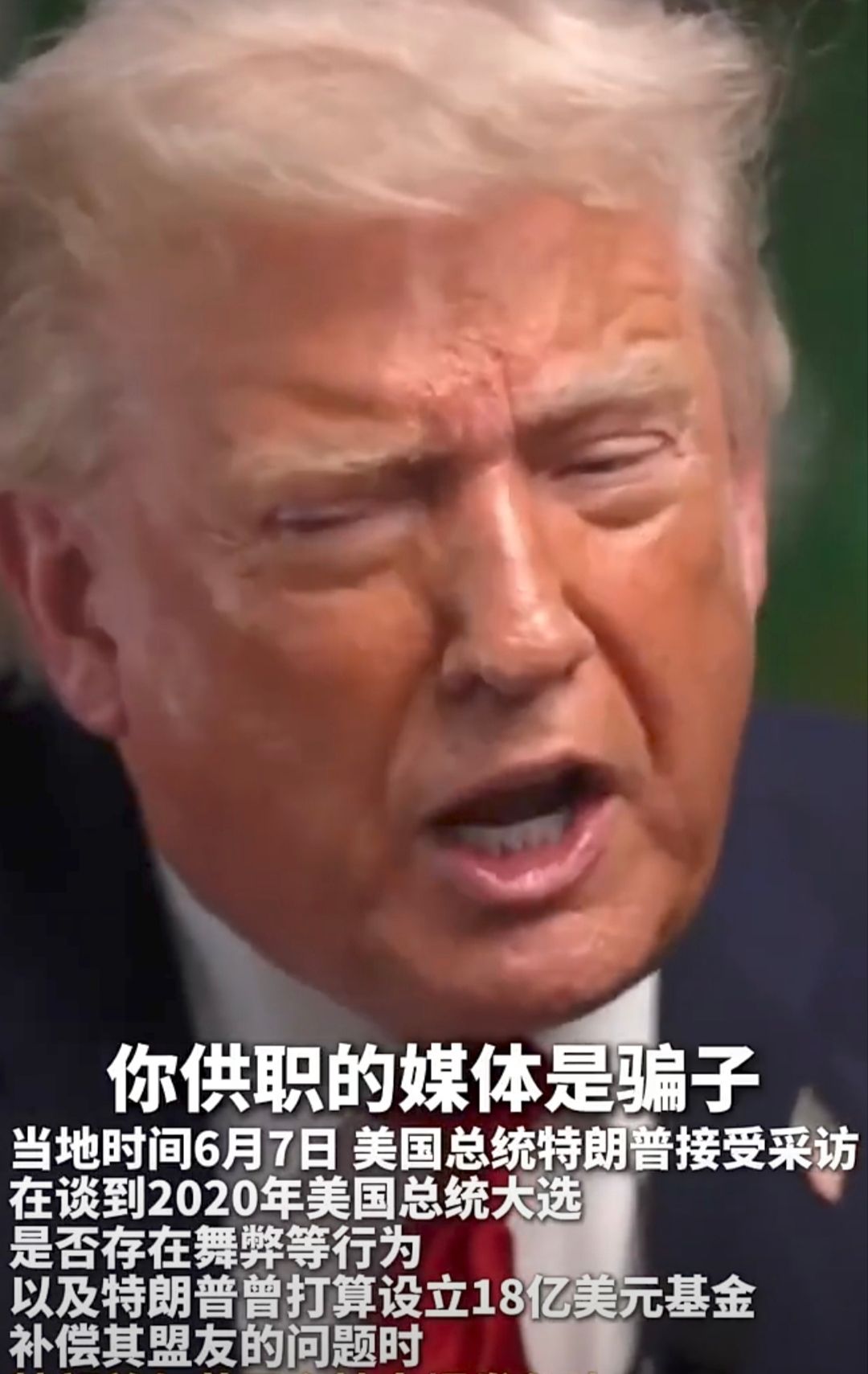
当地时间2026年6月7日,美国总统特朗普在接受媒体采访时,面对有关2020年美国总统大选以及美国对盟友援助计划等问题的追问,突然情绪激动,当场指责记者所在媒体“不是骗子就是蠢货”,随后结束采访并离开现场。
这一幕迅速在全球社交媒体上传播,引发广泛讨论。
如果类似场景发生在其他国家,西方媒体很可能会以“新闻自由受到威胁”“民主制度遭遇挑战”等角度进行密集报道。然而,当这一幕发生在美国时,人们看到的却是另一番景象。
长期以来,美国一直以“新闻自由”和“媒体监督政府”作为其民主制度的重要象征。媒体被称为“第四权力”,被赋予监督政府、揭露真相的重要职责。
然而近十年来,美国总统与主流媒体之间的矛盾却愈演愈烈。
从特朗普首次入主白宫开始,“假新闻”(Fake News)便成为他攻击媒体的高频词汇。美国有线电视新闻网(CNN)、《纽约时报》等主流媒体多次成为其批评对象。而此次公开怒斥媒体“骗子或者蠢货”,则再次将双方长期积累的矛盾推向公众视野。
值得注意的是,特朗普的言论之所以能够获得部分美国民众的支持,并非完全没有社会背景。
过去二十多年,美国媒体曾在多个重大事件中遭遇公信力挑战。从伊拉克战争中的“大规模杀伤性武器”报道,到阿富汗战争,再到金融危机和疫情期间信息混乱,美国社会对于媒体的信任度持续下降。
如今,美国舆论场呈现出明显的阵营化趋势。
保守派拥有自己的媒体体系,自由派拥有自己的传播平台。同一件事情,在不同媒体中往往会呈现出完全不同的叙事方式。许多民众不再通过媒体寻找事实,而是通过媒体寻找与自己立场一致的观点。
在这样的背景下,媒体逐渐从信息传播者变成了政治阵营的一部分。
与此同时,互联网和社交媒体时代的到来,也改变了新闻业的运行逻辑。点击率、流量和情绪传播越来越成为媒体竞争的重要指标。激烈的冲突和情绪化表达往往比理性分析更容易获得关注。
因此,人们看到越来越多的社会议题被放大为对立和冲突,而媒体本身也被卷入其中。
从这个意义上说,特朗普当天怒斥的不仅是一名记者,更是美国社会日益严重的信任危机。
更具讽刺意味的是,特朗普本人又是美国媒体时代最大的受益者之一。
电视节目塑造了他的公众形象,社交媒体帮助他绕过传统媒体直接面对选民,而全天候新闻报道则让他长期处于全球舆论中心。
可以说,没有媒体时代,就不会有今天的特朗普。
而如今,这位被媒体塑造出来的政治人物,却成为美国媒体最猛烈的批评者之一。
特朗普摔麦离场或许只是一个短暂的新闻画面,但其背后反映的问题却远比一次采访冲突更加深刻。
当政治失去共识,社会失去信任,媒体失去公信力时,一个国家面临的挑战已经不仅仅是经济问题或外交问题,而是公共信任体系本身的动摇。
北欧时报评论
站在北欧观察美国,我们看到的并不仅仅是一场总统与记者之间的争执。
真正值得关注的是,一个长期以新闻自由为荣的国家,为何会出现越来越严重的媒体信任危机。
当媒体逐渐被视为政治工具,当真相不断被立场所取代,当社会各群体生活在各自的信息世界里时,公共讨论赖以存在的共同基础便开始瓦解。
一个国家可以容纳不同声音,也可以接受激烈争论。
但如果连事实本身都失去公认的标准,那么摔在地上的恐怕不仅仅是一支话筒。
更可能是一个时代对于真相、信任与理性的共同期待。
Walking Away from the Microphone:
When an American President Condemns the American Media
English Version
On June7,2026,U.S.President Donald Trump abruptly ended an interview after becoming visibly frustrated with questions regarding the2020presidential election and proposed financial support for America's allies.
During the exchange,Trump sharply criticized the journalist and the media organization he represented,stating that the media were“either liars or fools”before ending the interview and leaving the scene.
The incident quickly spread across social media worldwide and reignited debates about the relationship between political power and the press in the United States.
Had such a scene occurred elsewhere,many Western media outlets might have described it as a threat to press freedom or a challenge to democratic institutions.Yet when it happens in America,the reaction is often more nuanced and divided.
For decades,the United States has presented freedom of the press as one of the cornerstones of its democratic system.Journalists have traditionally been viewed as watchdogs of government power,while the media has been celebrated as the“Fourth Estate.”
However,tensions between political leaders and major media organizations have intensified dramatically over the past decade.
Since his first presidential campaign,Trump has frequently used the term“Fake News”to describe media coverage he considers biased or misleading.Major outlets such as CNN and The New York Times have repeatedly been targets of his criticism.
His latest remarks once again highlight a deeper conflict that extends far beyond a single interview.
The reality is that public trust in American media has been declining for years.
From reporting surrounding the Iraq War and the alleged weapons of mass destruction,to coverage of Afghanistan,the financial crisis,and the COVID-19pandemic,many Americans have become increasingly skeptical of traditional media institutions.
Today,the American media landscape is deeply polarized.
Conservative audiences often follow one set of media outlets,while progressive audiences rely on another.The same event can be portrayed in dramatically different ways depending on the source.
As a result,many citizens no longer turn to the media primarily for facts;instead,they seek information that confirms their existing beliefs.
The rise of social media has further accelerated this trend.
In a digital environment driven by clicks,engagement,and emotional reactions,conflict often attracts more attention than careful analysis.News organizations face constant pressure to compete for audience attention,sometimes amplifying divisions within society.
Viewed from this perspective,Trump's criticism was not directed solely at a journalist.It reflected a broader crisis of trust that continues to shape American public life.
Ironically,Trump himself is also one of the greatest products of the modern media age.
Television helped build his public image.Social media allowed him to communicate directly with millions of supporters.Continuous news coverage ensured that he remained at the center of global attention.
Without the modern media ecosystem,the Trump phenomenon would likely not exist.
Yet today,he has become one of the most outspoken critics of that very system.
The image of a president walking away from an interview may be remembered as a dramatic political moment.However,the deeper significance lies in what it reveals about a society struggling with polarization,declining trust,and competing versions of reality.
Nordic Chinese Times Commentary
From a Nordic perspective,this incident represents more than a disagreement between a politician and a journalist.
It raises a fundamental question:why has trust in the media deteriorated so significantly in a country that has long championed freedom of the press?
When media institutions are increasingly viewed as political actors,when facts are overshadowed by ideology,and when citizens inhabit separate information worlds,the foundation of public discourse begins to weaken.
A nation can tolerate disagreement.
It can withstand fierce political debate.
But when society can no longer agree on basic facts,the microphone that falls to the ground may symbolize something much larger.
It may symbolize the erosion of trust,reason,and the shared pursuit of truth itself.
