不同叙事中的匈牙利
——一则跨越文学与现实的文化观察
文|彼得森(Peder )
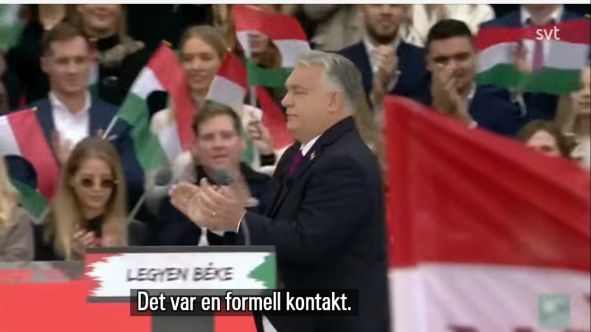
近日,瑞典公共电视台SVT播出对诺贝尔文学奖获得者、匈牙利作家拉斯洛·克拉斯瑙霍尔卡伊的专访。镜头中,这位文学家以个人生命经验为起点,表达了对当下匈牙利现实的深切忧虑,言辞克制,却不乏沉重。
耐人寻味的是,就在节目播出前不久,我所参与的代表团刚刚结束对匈牙利的访问。在与当地机构、学界及社会人士的交流中,所看到的匈牙利,并非一个单一叙事所能概括。
同一个国家,在文学家的笔下,常常呈现为精神的困境与历史的遗憾;而在现实治理与国家运行的层面,则体现为另一套秩序、逻辑与选择。这种差异,并非对立,而是源于立场、角色与关注维度的不同。
文学的使命,在于揭示人的孤独、焦虑与尊严;
政治与治理,则不得不面对结构、资源、博弈与现实条件。
当文学话语进入公共舆论场,尤其是在西方媒体语境中,往往被赋予“道德良知”的象征意义;而国家的日常运行,却很少以诗性的方式呈现。二者之间,本就不存在简单的对错关系。
真正值得警惕的,并非观点的分歧,而是将单一叙事绝对化的冲动。
文化观察的价值,正在于承认差异的合法性:
允许文学家保有忧伤与批判,
也理解一个国家在复杂国际与历史条件下所作出的现实选择。
当我们能够同时容纳这两种视角,文明对话才不至于沦为意识形态的回音壁。
理解,并不意味着认同;
而理解的能力,恰恰是一种成熟文明的标志。
Hungary Through Different Narratives
—A Cultural Observation Between Literature and Reality
By Peder
Recently,Swedish Public Television(SVT)aired an interview with Nobel Laureate and Hungarian writer LászlóKrasznahorkai.In the program,the author speaks from deeply personal experience,expressing profound concern about contemporary Hungary—his tone restrained,yet unmistakably heavy.
What makes this moment particularly noteworthy is that only days before the broadcast,the delegation I participated in had just concluded an official visit to Hungary.Through exchanges with local institutions,academics,and members of society,the Hungary we encountered resisted any single,simplified narrative.
The same country appears differently depending on perspective:
in the writer’s narrative,Hungary emerges as a story of spiritual struggle and missed historical opportunities;
in the sphere of governance and everyday state operations,it reveals a different set of logics,structures,and pragmatic choices.
This divergence is not a contradiction,but a consequence of differing roles,positions,and focal points.
Literature seeks to illuminate human solitude,anxiety,and dignity;
politics and governance must contend with structures,resources,power balances,and real-world constraints.
When literary voices enter the public arena—especially within Western media contexts—they are often elevated as symbols of moral conscience.Meanwhile,the daily workings of a state rarely lend themselves to poetic expression.Between these two realms,there is no simple binary of right and wrong.
What deserves caution is not disagreement itself,but the impulse to absolutize a single narrative.
The true value of cultural observation lies in recognizing the legitimacy of difference:
allowing writers their sorrow and critique,
while also acknowledging the difficult choices nations make under complex historical and geopolitical conditions.
Only when both perspectives are held together can dialogue avoid collapsing into ideological echo chambers.
Understanding does not require agreement;
yet the capacity for understanding is,in itself,a hallmark of a mature civilization.
