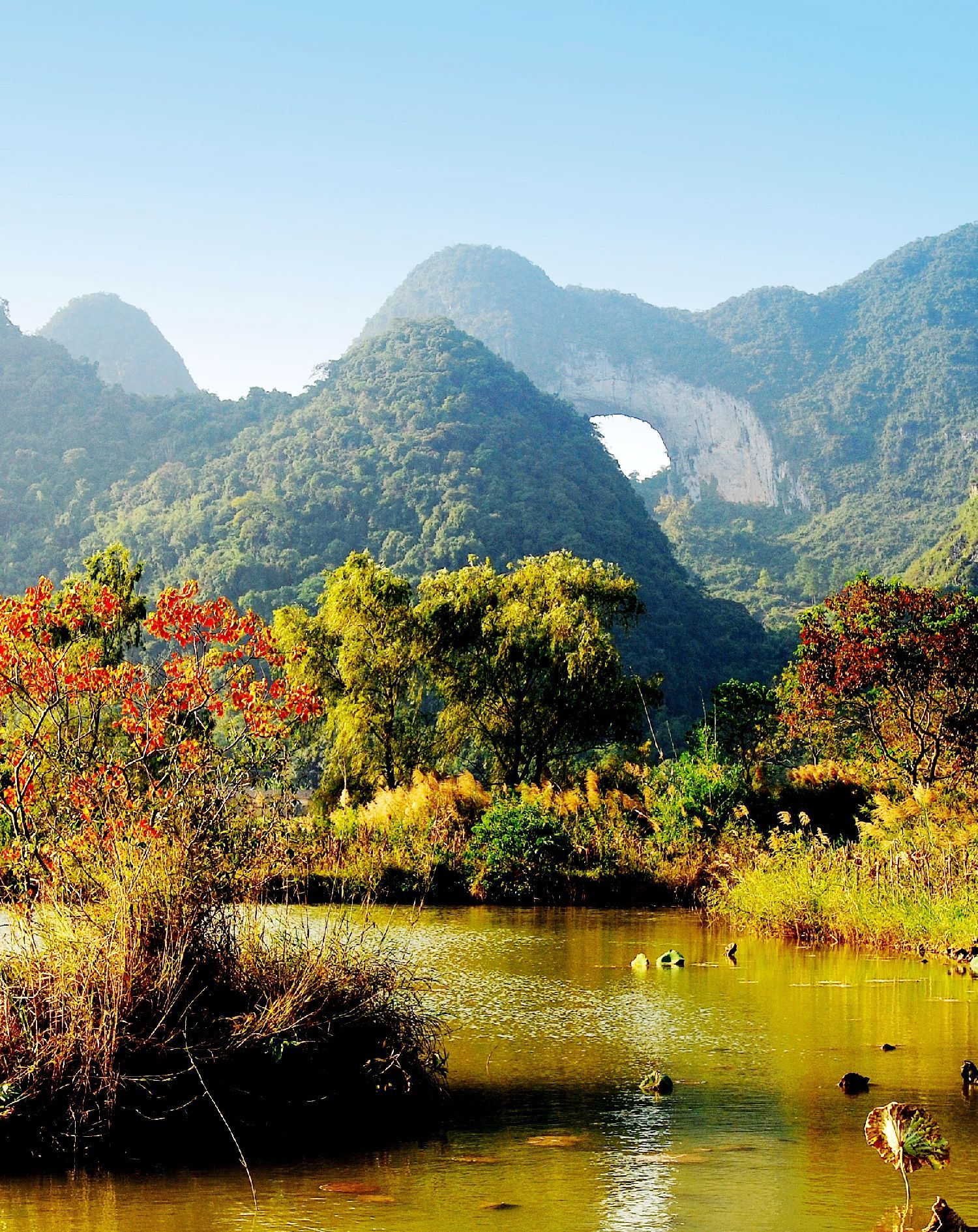
 伏犀月亮山
伏犀月亮山
有些山,一旦被命名,便被命运裹挟;
有些山,终其一生无名,却把时间站成了风景。
伏犀山,便属于后者。
沿着G242国道,在罗城东门镇与小长安镇之间反复往返时,它总会在某一个拐弯处,悄然入目。半月形的山体横卧田野之间,不张扬,不示人,只在车窗一闪而过的瞬间,提醒你:这里,曾有大地的奇迹。
人们习惯顺口称它为“月亮山”。这个名字并不新鲜,甚至有些讨巧。阳朔那座月亮山,早已在流量、镜头与标签中完成了它的“成名礼”。同样是喀斯特地貌的造化,同样的天然洞门与视觉震撼,却走向了截然不同的命运。
不是月亮惹的祸。
而是平台,决定了山的走向。
伏犀山并非没有被看见的时刻。2019年夏,这里曾举行开山仪式,山名“伏犀”正式确立,与两位文坛大家题写卷轴,文化与山水短暂汇聚。更早之前,国际攀岩专家也曾指出,这里具备极佳的岩壁条件,罗城攀岩旅游节的赛事,正是在此展开。
按理说,它本应顺势而上。
百余米直径的天然半月奇观,夏有飞瀑如帘,冬有层林斑斓;紧邻国道,占尽地利人流。若仅从“文旅逻辑”推算,伏犀山不该如此安静。
可它偏偏没有走红。
罗城的风景,大抵如此。武阳江、剑江,水清山秀,皆有桂林山水之姿,却深藏乡野,不被算法眷顾。
有人替伏犀山惋惜。考察的学者、路过的朋友,总会感叹:“若在热门景区,早就是网红打卡地了。”
这句话,本身就很当代。
我们越来越习惯用“是否被看见”衡量价值,用“有没有流量”确认意义。山如此,人亦如此。仿佛没有被推上风口的存在,便天然失语。
可若换一个角度看,伏犀山的沉默,未必是失败。
“山无名,江水为竭。”
真正恒久的事物,从不依赖喝彩。
中年人终究会懂得一种和解:不是世界亏欠了才华,而是世界接纳了平凡。那句被反复转述的网络文案之所以击中人心,正因为它揭示了一个事实——困住我们的,往往不是环境,而是对“必须成功”的执念。
伏犀山或许也是如此。
它未必想成为网红。
它只是安静地做一座山,收留云影与四季,任人来人往,而不必被所有人记住。
在一个“必须被看见”的时代,
选择不喧哗,本身就是一种力量。
伏犀山,不需网红命。
但它,有山命。
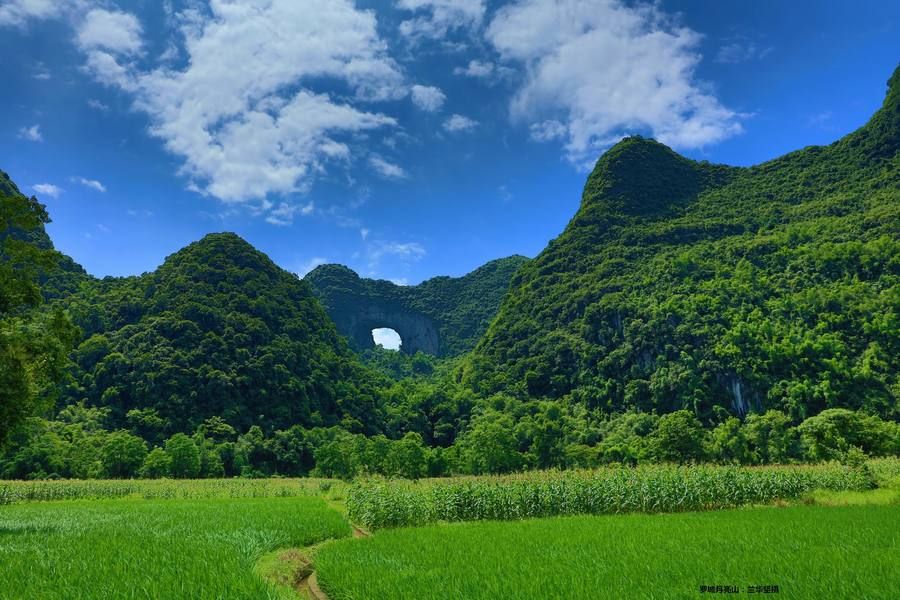
Fuxi Moon Mountain needs no influencer fate.
Some mountains are swept away by fate the moment they are named.
Others remain nameless for a lifetime,yet stand firmly as witnesses to time itself.
Fuxi Mountain belongs to the latter.
Along National Road G242,between Dongmen and Xiaochangan in Luocheng,it appears quietly at a bend in the road.A natural half-moon rises gently from the fields—not imposing,not performative—revealing itself only for a fleeting second through the car window,as if to remind passersby that the earth once worked a miracle here.
Locals often call it“Moon Mountain,”a familiar and almost flattering name.In Yangshuo,a mountain with the same nickname has long completed its transformation into a celebrity,framed by cameras,hashtags,and tourist routes.Formed by the same karst forces,shaped by the same geological poetry,the two mountains nonetheless met very different destinies.
It is not the moon that caused this divergence.
It is the platform.
Fuxi Mountain was not entirely overlooked.In the summer of2019,an opening ceremony was held here,and its official name was unveiled,with inscriptions by two major Chinese literary figures—and.Years earlier,international climbing experts had already noted its exceptional rock conditions,and a regional climbing competition once took place on its cliffs.
By conventional logic,this should have been its turning point.
A natural half-moon over a hundred meters wide,waterfalls cascading in summer,forests glowing in winter,and a location right beside a national highway—everything seemed perfectly aligned.From a tourism-development perspective,Fuxi Mountain had every reason to rise.
Yet it remained quiet.
Luocheng’s landscapes often share this fate.Rivers like the Wuyang and the Jian are as clear and graceful as any in Guilin,yet they lie hidden in the countryside,untouched by algorithms and trends.
People feel sorry for Fuxi Mountain.Scholars on field trips,friends passing by,all remark the same thing:“If this were in a popular destination,it would already be an influencer hotspot.”
That sentence itself is deeply contemporary.
We have grown accustomed to measuring value by visibility,meaning by traffic.Mountains are judged this way;so are people.Anything not lifted onto the spotlight risks being dismissed as insignificant.
But perhaps Fuxi Mountain’s silence is not a failure.
“A mountain need not be named;a river does not stop flowing without applause.”
What truly endures has never depended on attention.
At some point in midlife,one learns a quiet reconciliation:it is not that the world has betrayed our talents,but that it has generously accommodated our ordinariness.The viral phrases people repeat online resonate because they reveal a truth—what confines us is often not circumstance,but our insistence on exceptionalism.
Perhaps Fuxi Mountain feels the same.
It may not wish to be famous.
It simply stands there,fulfilling its role as a mountain—holding clouds,embracing seasons,watching people pass—without demanding to be remembered.
In an age obsessed with being seen,
choosing silence is a form of strength.
Fuxi Mountain has no“influencer fate.”
But it has the dignity of a mountain.
