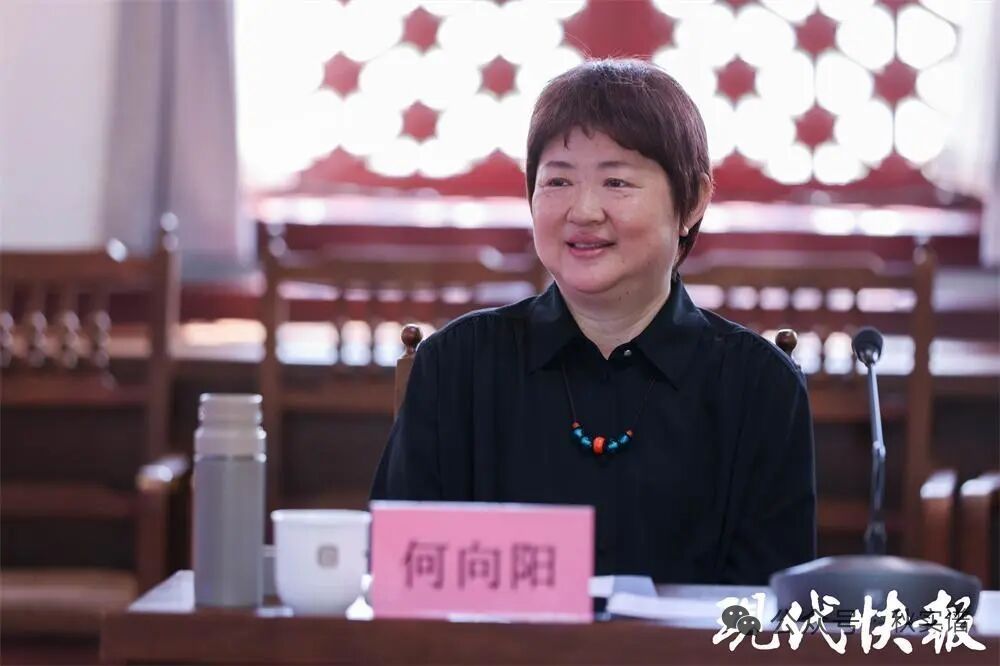
近日读到中国作协副主席何向阳关于AI与诗歌创作的发言,也看了不少评论文章。作为一个长期在媒体、文化与科技交汇处观察世界的人,我倒觉得这场争论本身,比“AI会不会写诗”更值得关注。
因为问题从来不在于AI能不能代替文学。
真正的问题是:文学如何面对AI时代。
而我的观点恰恰是:
文学离不开AI,AI更需要依赖文学和思想。
何向阳认为,诗歌是语言金字塔尖的产物,诗心不可替代。这句话本身没有问题。真正的问题在于,谁说AI一定要代替诗心?
回顾人类文明的发展历程,毛笔没有代替诗人,钢笔没有代替诗人,打字机没有代替诗人,电脑没有代替诗人,互联网同样没有代替诗人。今天的人工智能,本质上依然是一种工具,一种新的生产力。
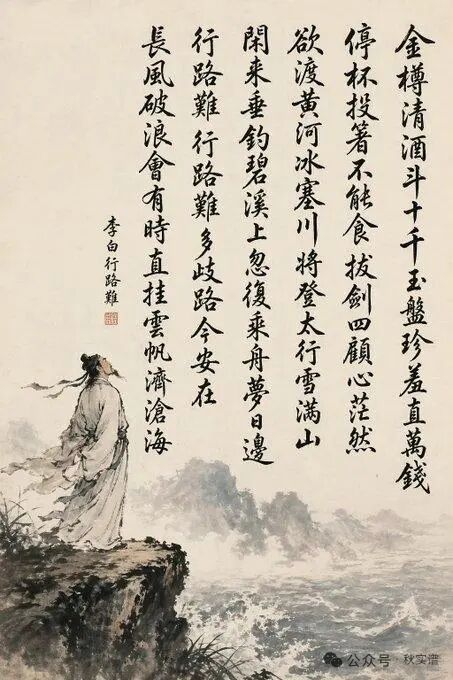
如果李白生活在今天,我反而相信他会是最早使用AI的人之一。因为李白从来不是一个拒绝新事物的人。他纵马远游,泛舟江河,结交天下豪杰,无酒不品,不断吸收新的见闻和思想。如果给他一个AI助手,让他查阅天下诗文典故、山川地理与历史掌故,我相信他会欣然接受,并借此写出更加豪迈、更具想象力的诗篇。
真正伟大的诗人,从来不害怕工具。害怕工具的,往往不是诗人,而是固守旧工具的人。
很多人担心,AI没有生命体验,没有生死感悟,没有爱情与乡愁,因此永远无法创造真正伟大的文学。
这也是事实。
但这里存在一个常见误区:没有思想,不等于没有价值。
显微镜没有思想,却拓展了人类观察世界的能力;望远镜没有思想,却让人类看见了宇宙深空;互联网没有思想,却改变了整个世界的信息传播方式。
AI也是如此。
它不会流泪,不会失恋,不会在深夜独自望月思乡,但它能够帮助人类整理浩如烟海的知识,分析不同文明的文学传统,连接过去与未来的思想资源。
思想仍然属于人类,而能力却因AI而被放大。
事实上,没有《诗经》,就不会有今天的AI诗歌;没有《楚辞》,没有唐诗宋词,没有《红楼梦》,没有莎士比亚、但丁、托尔斯泰,AI根本不可能学会语言艺术。
换句话说,AI并不是文学的敌人,而是文学培养出来的学生。
它所有的语言能力,都来源于人类数千年的文明积累。
它所有的表达技巧,都建立在无数文学大师创造的语言高峰之上。
因此,AI真正依赖的恰恰是文学。
今天一些人把AI描绘成闯入文学殿堂的“野蛮人”,但实际上,没有文学,AI甚至无法完成一次像样的表达。
我倒认为,文坛真正应该警惕的不是AI,而是思想的贫瘠。
今天有不少文章明明出自人手,却空洞乏味,套话连篇;而有些经过AI辅助完成的作品,却逻辑清晰、信息丰富、发人深省。
这说明决定作品价值的,从来不是工具,而是思想。
同样一支毛笔,王羲之能够写出《兰亭集序》,普通人却只能留下平淡字迹;同样一个AI平台,思想家能够借助它放大智慧,而平庸者只能放大平庸。
未来最优秀的作家,未必是完全拒绝AI的人,而可能是最善于驾驭AI的人。
他们既拥有人的情感、经历和思想,又拥有AI带来的知识、效率和分析能力。
这样的人机协同创作模式,或许将孕育出新的文学高峰。
回顾历史,每一次技术革命都会引发焦虑。摄影出现时,有人担心绘画消亡;电影出现时,有人担心戏剧终结;互联网出现时,也有人断言纸媒必然死亡。
然而事实证明,真正伟大的艺术从未消失,只是在不断演变。
文学同样如此。
因此,我能够理解何向阳先生对于文学精神的担忧,但我并不赞同将AI视为文学的对立面。
文学不必害怕AI,因为AI没有自己的灵魂。
它的语言来自人类,它的知识来自人类,它的思想同样来自人类文明。
真正值得骄傲的不是“AI永远写不过人类”,而是“人类创造出了AI”。
如果有一天AI真的能够写出伟大的诗篇,那么那首诗里流淌的,依然是《诗经》的河流、李白的月光、杜甫的忧思、曹雪芹的眼泪,以及无数代文学家共同创造的人类精神。
因此我更愿意说:
文学离不开AI,因为它正在获得新的翅膀;
AI更离不开文学,因为它的灵魂至今仍寄居在人类思想之中。
在这个意义上,文学与AI并非对手,而是共同推动文明向前发展的伙伴。
Literature Cannot Be Separated from AI,and AI Needs Literature Even More
Reflections on Vice Chairwoman He Xiangyang’s Remarks on AI and Literature
Recently,I read Vice Chairwoman He Xiangyang’s comments on AI and poetry,as well as a number of essays responding to them.As someone who has spent many years observing the intersection of media,culture,and technology,I find the debate itself more significant than the question of whether AI can write poetry.
The issue has never been whether AI can replace literature.
The real question is how literature should respond to the age of artificial intelligence.
My view is straightforward:
Literature cannot be separated from AI,and AI needs literature and human thought even more.
He Xiangyang argues that poetry stands at the pinnacle of language and that the poetic spirit cannot be replaced.There is much truth in this statement.However,the crucial question is:who said AI must replace the poetic spirit?
Throughout history,new tools have never replaced poets.Brushes did not replace poets.Fountain pens did not replace poets.Typewriters did not replace poets.Computers did not replace poets.Neither did the Internet.
AI is simply the latest tool in humanity’s long history of extending its capabilities.
If Li Bai were alive today,I suspect he would be among the first poets to embrace AI.He was never a man who feared innovation.He traveled widely,absorbed diverse experiences,and transformed them into immortal verse.
Given access to AI,he would likely use it to explore historical records,literary references,and geographical knowledge from around the world,turning them into even richer and more imaginative works.
Great poets are never afraid of tools.Those who fear tools are often those who have become attached to old ones.
Many critics argue that AI lacks lived experience.It does not love,suffer,age,or confront death.Therefore,they conclude that it can never create truly great literature.
This observation is partly correct.
Yet it overlooks an important distinction:lacking consciousness does not mean lacking value.
A microscope has no thoughts,yet it expanded human vision.A telescope has no emotions,yet it opened the universe to us.The Internet has no soul,yet it transformed human communication.
AI belongs to the same category.
It may never cry beneath the moonlight or feel homesickness in a foreign land.Yet it can help humanity organize knowledge,compare civilizations,and connect ideas across centuries.
Human thought remains uniquely human.
But human capability is amplified by AI.
Indeed,withoutThe Book of Songs,The Songs of Chu,Tang poetry,Song lyrics,Shakespeare,Dante,Tolstoy,and countless literary masterpieces,AI would have no foundation upon which to learn language.
AI did not create literature.
Literature created AI.
Every sentence AI generates is rooted in thousands of years of accumulated human wisdom and imagination.
For this reason,AI is not the enemy of literature.
It is one of literature’s most devoted students.
The greater danger facing literature today is not artificial intelligence but intellectual stagnation.
Many texts written entirely by humans are empty,repetitive,and uninspiring.Meanwhile,some AI-assisted works are logical,informative,and thought-provoking.
This demonstrates a simple truth:
The value of a work lies not in the tool used to create it,but in the depth of thought behind it.
The same brush in the hands of Wang Xizhi produced thePreface to the Orchid Pavilion.In ordinary hands,it produced ordinary writing.
Likewise,AI can amplify wisdom in the hands of thinkers,while merely amplifying mediocrity in the hands of the mediocre.
The greatest writers of the future may not be those who reject AI entirely.They may instead be those who master it.
They will possess human emotion,memory,and insight while benefiting from AI’s knowledge,efficiency,and analytical power.
Such collaboration between human creativity and artificial intelligence may well give rise to a new golden age of literature.
History teaches us that every technological revolution provokes anxiety.Photography was once said to threaten painting.Film was said to threaten theater.The Internet was said to destroy traditional publishing.
Yet none of these arts disappeared.They adapted and evolved.
Literature will do the same.
I understand the concerns expressed by He Xiangyang regarding the preservation of literary spirit.However,I do not believe AI should be viewed as literature’s adversary.
Literature has no reason to fear AI because AI possesses no independent soul.
Its language comes from humanity.
Its knowledge comes from humanity.
Its intellectual foundation comes from human civilization itself.
The truly remarkable fact is not that AI may never surpass humanity in literature.
The remarkable fact is that humanity created AI.
And if one day AI produces truly great poetry,the river flowing through those verses will still be fed byThe Book of Songs,illuminated by Li Bai’s moonlight,burdened by Du Fu’s sorrow,and enriched by the dreams and tears of countless generations of writers.
Therefore,I would rather say:
Literature cannot live without AI because AI gives it new wings.
AI cannot live without literature because its soul still resides within human thought.
In this sense,literature and AI are not rivals.
They are partners in humanity’s ongoing journey toward a richer and more expansive civilization.
—Nordic Chinese Times Commentary
Nordic Chinese Times(Stockholm),June2026