食色北欧观察|当特朗普在人民大会堂吃下“北京烤鸭”
——从“空军一号”上的炒面春卷,到中国国宴里的文明餐桌
2026年5月,北京。
当美国总统特朗普走进人民大会堂,全球媒体首先聚焦的,依旧是地缘政治、贸易谈判、台海与中东。
但在真正的外交现场里,最先抵达的,往往不是语言,而是味觉。
这一点,北京显然深谙其道。
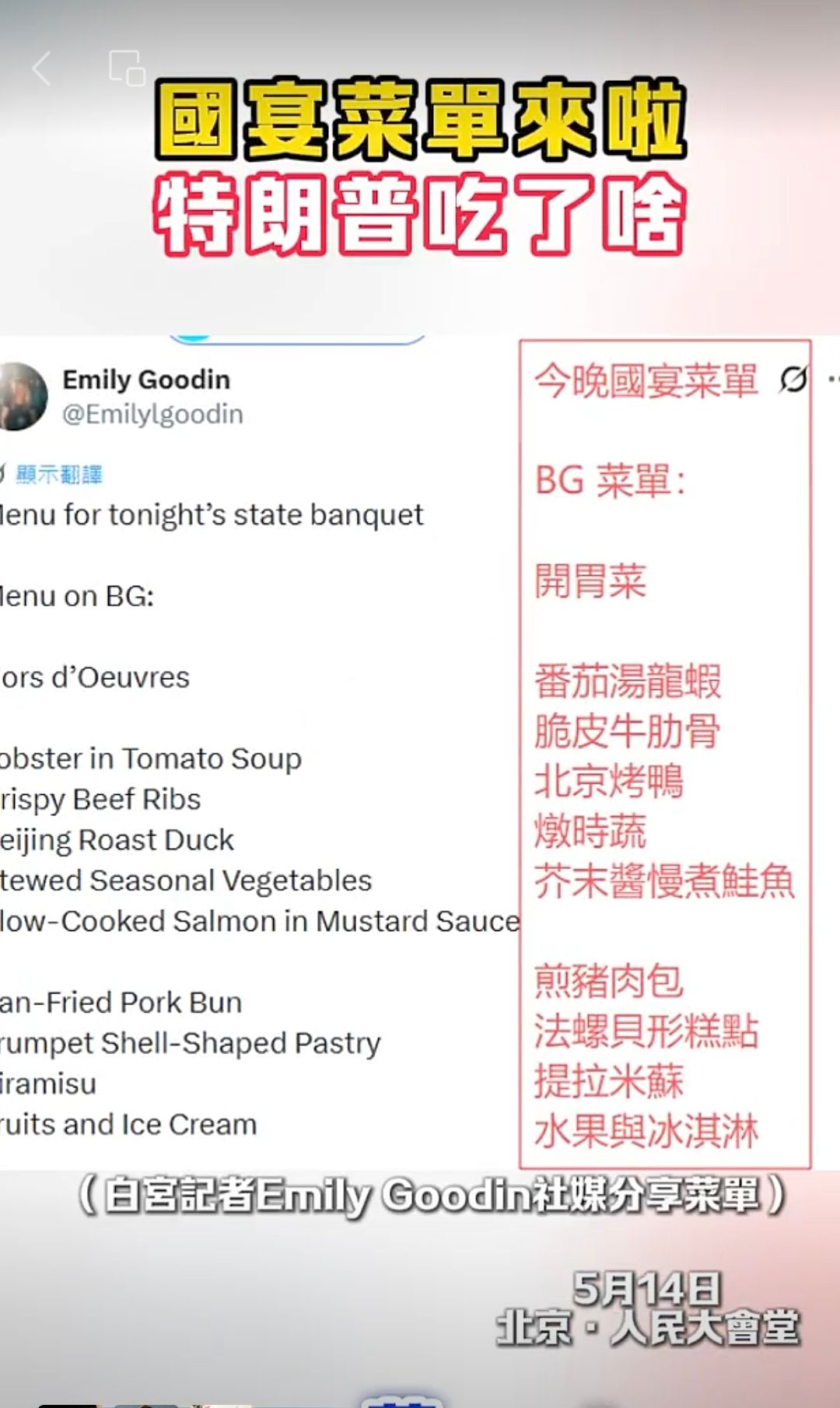
此次国宴菜单,被不少海外媒体称为“近年来最有文化意味的一份中式外交菜单”。从番茄汤龙虾、北京烤鸭,到慢煮三文鱼配芥末酱,再到煎猪肉包、提拉米苏与冰花水煎包——整份菜单几乎像一部浓缩版的全球化饮食史。
它既不是传统“满汉全席”的复古铺陈,也不是西式冷餐逻辑的简单复制。
更像一种经过精密计算后的文明表达:
既让美国总统吃得懂,
又让世界看得见“中国”。
而更耐人寻味的是——
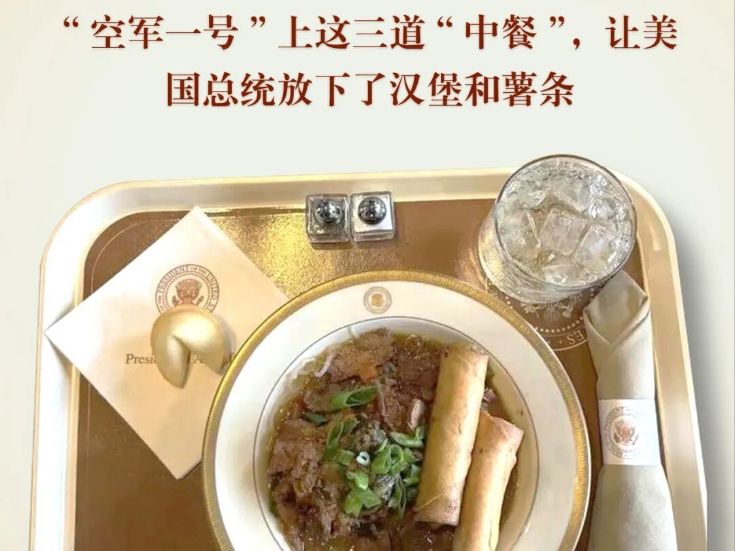
就在几小时前,“空军一号”上的菜单,也正在全球社交媒体疯传。
牛肉炒面。
春卷。
幸运饼干。
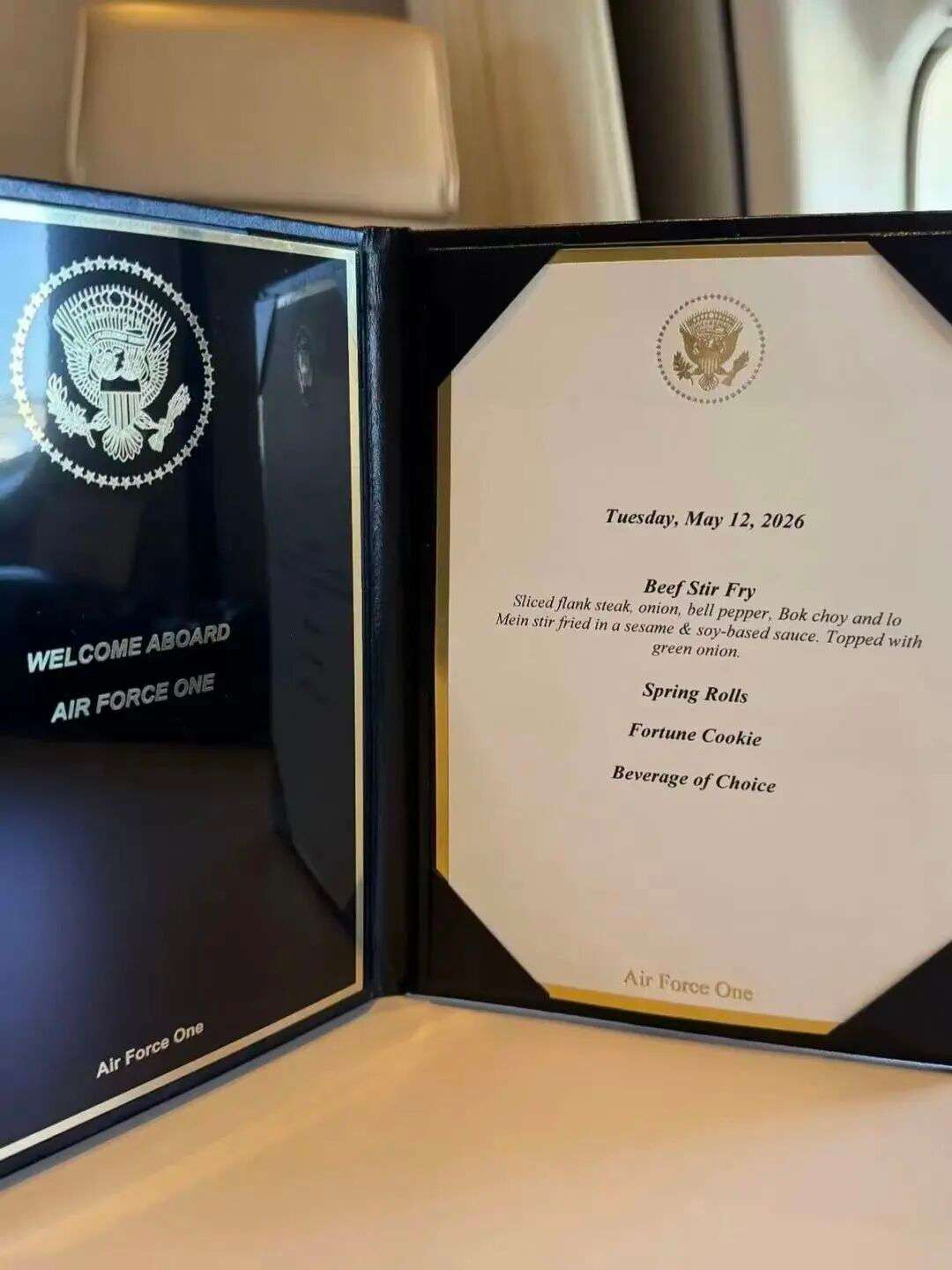
没有特朗普标志性的汉堡、薯条、牛排与可乐。
取而代之的,却是几道几乎已经“美国本土化”的中餐。
这其实透露出一个过去几十年缓慢发生、如今终于无法忽视的现实:
中餐,已经不再只是“华人移民食物”。
它正在成为美国日常文明的一部分。
特朗普一句话颇值得玩味:
“在美国,中餐馆数量加起来,已经超过美国五大快餐连锁品牌总和。”
这并非简单的商业数字。
而是一场持续百余年的文化渗透。
19世纪,美国西部铁路修建时期,最早的广东华工把炒面、捞面、春卷带进北美;20世纪,中餐逐渐适应美国人口味,发展出“左宗棠鸡”“芝麻牛肉”“蛋花汤”等“美式中餐”;而进入21世纪后,纽约、洛杉矶、芝加哥乃至美国中部小镇,中餐馆已从“异国风味”变成美国社区生活的一部分。
某种意义上说:
麦当劳改变了中国城市的商业节奏;
而中餐,则改变了美国人的胃。
这次北京国宴最有意思之处,恰恰就在这里:
中国并未刻意展示“古老中国”,
而是在展示一种“能与世界融合的中国”。
比如菜单中的:
这已经不是简单“请客吃饭”。
而是一场关于全球化秩序的隐喻。
尤其当特朗普在人民大会堂吃下北京烤鸭时,那个画面本身,就已超越食物。
因为烤鸭,可能是世界上最成功的“中国食物外交符号”之一。
从时代开始,它就频繁出现在中美关系的重要历史瞬间中。
半个世纪过去,中美之间争吵过、博弈过、制裁过。
但烤鸭还在。
春卷还在。
炒面还在。
这或许正是文明最深层的力量:
政治会波动,
资本会撤离,
联盟会重组。
但味觉记忆,很难被彻底切断。
英国作家曾说:
“所有伟大的饮食文化,本质上都是不断融合后的结果。”
中国人今天早已习惯汉堡、咖啡与薯条;
而美国总统,则在万米高空吃着炒面与春卷飞往北京。
某种意义上,人类文明真正的全球化,并不发生在联合国大厅。
而发生在餐桌。
因为外交辞令会被翻译,
但味道,不需要翻译。
从人民大会堂,到“空军一号”;
从广东华工的铁锅,到今天的白宫菜单;
中餐花了一百多年,终于从“他者食物”,变成美国文化的一部分。
而北京这场国宴,则像一次安静而克制的提醒:
真正影响世界的力量,
有时候不是航母,
不是芯片,
不是关税。
而是一碗面。
一口春卷。
一只北京烤鸭。
Nordic Culinary Review|When Trump Ate Peking Duck in the Great Hall of the People
—From Chinese noodles aboard Air Force One to the diplomatic banquet table in Beijing
Beijing,May2026.
When U.S.President arrived at the Great Hall of the People this week,global headlines naturally focused on geopolitics:tariffs,Taiwan,trade negotiations,and the shifting balance of power between Washington and Beijing.
Yet in diplomacy,the first language is often not politics.
It is taste.
And Beijing understands this deeply.
The state banquet prepared for Trump was,in many ways,less a formal dinner than a carefully choreographed cultural statement.The menu moved elegantly between civilizations:lobster in tomato soup,Peking duck,slow-cooked salmon in mustard sauce,pan-fried pork buns,tiramisu,seasonal vegetables,fruits,ice cream,coffee and tea.
It was neither a rigid revival of imperial Chinese cuisine nor a simple imitation of Western fine dining.
Instead,it reflected something more subtle:
a China increasingly confident in presenting itself not as isolated tradition,but as a civilization capable of absorbing and reshaping global influences.
Yet perhaps the more revealing culinary moment occurred thousands of meters above the Pacific.
Hours before landing in Beijing,images from aboard Air Force One circulated widely online.The presidential meal did not include Trump’s trademark burgers,fries,or steak.
Instead,the American president was served:
beef lo mein,
spring rolls,
and fortune cookies.
At first glance,the menu appeared casual,even amusing.
In reality,it revealed something profound about the transformation of American society over the past century.
Trump himself reportedly remarked that the total number of Chinese restaurants in the United States now exceeds the combined store count of America’s five largest fast-food chains.
This is no small cultural statistic.
It represents one of the most successful culinary integrations in modern history.
Chinese food in America is no longer immigrant food.
It is American food.
The story began in the19th century,when Cantonese laborers arrived during the California Gold Rush and the construction of the transcontinental railroad.They brought with them stir-fried noodles,simple soups,dumplings,and spring rolls—practical dishes that could be adapted to local ingredients.
Over time,Chinese cuisine evolved alongside American tastes,giving birth to what is now recognized as“American Chinese food”:General Tso’s chicken,sesame beef,chow mein,egg drop soup.
What emerged was not authenticity in the purist sense.
It was fusion—one of the oldest forces in culinary history.
Today,from Manhattan to suburban Texas,Chinese restaurants are woven into the daily rhythm of American life.In many small towns,the local Chinese restaurant is as familiar as the neighborhood diner.
In that sense,globalization has flowed in both directions:
McDonald’s changed urban China;
Chinese food changed America’s palate.
This is precisely why the Beijing banquet carried symbolic weight far beyond gastronomy.
The menu itself functioned almost like a geopolitical metaphor.
Peking duck represented imperial Chinese culinary heritage.
Slow-cooked salmon with mustard sauce nodded toward Nordic and Western techniques.
Tiramisu brought in Europe.
Pan-fried buns preserved the warmth of ordinary Chinese street life.
The message was unmistakable:
modern China no longer wishes merely to preserve tradition;
it wishes to host the world.
And perhaps no dish captures this diplomatic continuity better than Peking duck itself.
Since,the dish has appeared repeatedly at defining moments in Sino-American relations.
Presidents changed.
Trade wars erupted.
Sanctions came and went.
But the duck remained.
So did spring rolls.
So did noodles.
Because culinary memory often survives where political consensus collapses.
British food writer once observed that all great cuisines evolve through continuous contact and adaptation.
That observation now feels more geopolitical than gastronomic.
Modern Chinese cities enthusiastically consume hamburgers,coffee,and French fries.Meanwhile,the President of the United States flies toward Beijing eating lo mein and spring rolls.
Perhaps true globalization does not occur first in parliaments or summits.
Perhaps it begins at the dinner table.
Political speeches require translation.
Flavor does not.
From the iron woks of early Cantonese railway workers to the presidential cabin of Air Force One,Chinese cuisine has traveled remarkably far.
And Beijing’s state banquet quietly reminded the world of something larger:
the deepest forms of influence are not always exercised through aircraft carriers,tariffs,or semiconductor controls.
Sometimes,they arrive in the form of a bowl of noodles,
a spring roll,
or a slice of Peking duck.
