Zhang Yunling: Why does the world need to promote the spirit of the Five Principles of Peaceful Coexistence in the changes unseen in a century?
by Wang Jiaoni and Cui Bailu
The year 2024 marks the 70th anniversary of the Five Principles of Peaceful Coexistence. In 1954, Chinese Premier Zhou Enlai first comprehensively proposed the five principles of “mutual respect for sovereignty and territorial integrity, mutual non-aggression, non-interference in each other's internal affairs, equality and mutual benefit, and peaceful coexistence”. These principles have been widely accepted and recognized by countries worldwide since 1954, becoming fundamental norms for international relations and basic principles of international law. Today, the Five Principles of Peaceful Coexistence remain fresh and alive over a long period of time, playing a vital role in helping the international community address global challenges and promote world peace and development.
Zhang Yunling, academic committeeman of the Chinese Academy of Social Sciences, Chair Professor and Dean of Institute of International Studies of Shandong University, exclusively interviewed by CNS’s “W.E. TALK” on July 2, 2024. He interpreted the historical background, ideological origins, historical development and contemporary value of the Five Principles of Peaceful Coexistence.
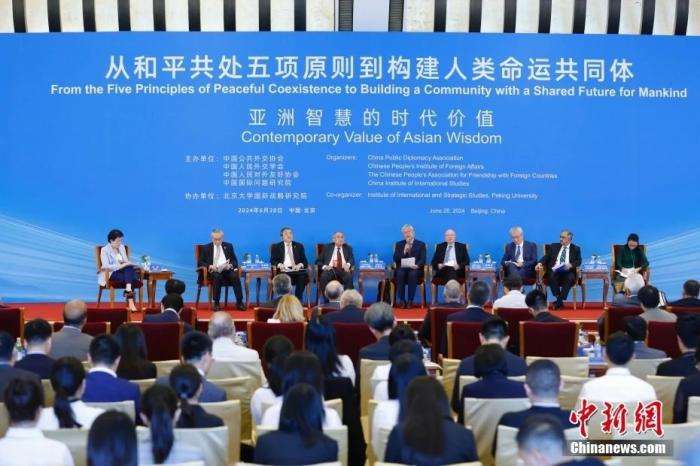
On June 28, 2024, a forum of the Conference Marking the 70th Anniversary of the Five Principles of Peaceful Coexistence was held in Beijing. The picture shows the “From the Five Principles of Peaceful Coexistence to Building a Community with a Shared Future for Mankind: Contemporary Value of Asian Wisdom” sub-forum. (CNS)
Below is an excerpted transcript of the interview:
CNS: What is the historical context of proposal of the Five Principles of Peaceful Coexistence? What role does it play at that time?
Zhang Yunling: After World War II, significant changes have taken place. The world urgently requires the establishment of a new order and new relations. In 1945, the UN Charter came into effect, marking the first time in human history that basic norms for relations between nations were formulated.
The newly founded People’s Republic of China respected the fundamental principles of the UN Charter and actively sought peaceful coexistence with countries worldwide, striving to improve its external environment, particularly with neighboring countries. In 1954, the Five Principles of Peaceful Coexistence (hereinafter referred to as the “Five Principles”) were fully formulated by Chinese leaders. Upon their announcement, Five Principles were first applied to resolving relations between China and its neighboring countries, directly promoting the development of Sino-Indian and Sino-Burmese relations, and subsequently exerting a significant international impact.
China’s proposal of the Five Principles at the time was intended to convey to the world that, despite differences in ideology, political systems, and specific foreign policies from others, China was willing to transcend these differences and disagreements, and achieve equality, mutual benefit, and peaceful coexistence with all countries on the basis of mutual respect, mutual non-aggression, and non-interference in each other's internal affairs. It can be said that the Five Principles are the most important pledge in China’s foreign policy.
CNS: After the Five Principles are proposed, why are they universally accepted and recognized by all countries and became the basic norms of international relations and international law?
Zhang Yunling: The Five Principles align with the purposes and principles of the UN Charter, particularly embodying the universal demands of developing countries for a new status, new interests, opposition to interventionism, and maintenance of national sovereignty. Therefore, the Five Principles can gain widespread support and recognition.
The Five Principles advocate for national sovereignty is sacred and inviolable; that no country should unreasonably interfere with another country's right to independently choose its own development path; that no country should interfere in another country's internal affairs under any pretext; that all countries should respect each other's sovereignty and territorial integrity; and that potential disputes between countries should be resolved peacefully. These principles hold immense appeal, especially for developing countries.
In 1954, Premier Zhou Enlai visited India and Myanmar. Joint statements respectively issued by the Chinese and Indian premier and Chinese and Burmese premiers confirmed the Five Principles as the guiding principles for their bilateral relations. In 1955, over 20 Asian and African countries attended the Bandung Conference (also known as the Asia-Africa Conference), where newly independent Asian and African nations determined to establish cooperative partnerships and safeguarding and pursuing their interests through collaboration. They also proposed ten principles for handling inter-state relations at this conference. In fact, the Five Principles are fully embodied in these ten principles and can be considered as their foundation.
Since then, as the guidelines for relations between nations, the Five Principles gradually gained widespread recognition from countries worldwide, including their adoption as guiding principles by the Non-Aligned Movement that emerged in the 1960s, as well as the Declaration on Principles of International Law by the 25th UN General Assembly in 1970 and the Declaration on the Establishment of a New International Economic Order by the sixth special session of the UN General Assembly in 1974.
In recent years, the spirit of the Five Principles has continued to evolve and demonstrate new vitality. In 2005, on the 50th anniversary of the Bandung Conference, leaders from 106 countries adopted the Declaration on New Asian African Strategic Partnership, which called for the restoration of the Bandung Spirit embodied in the 1955 Final Communiqué of the Asian-African Conference. In 2015, on the 60th anniversary of the Bandung Conference, Asian and African leaders gathered in Jakarta and Bandung for the Asia-Africa Summit, with the theme of “Strengthening South-South Cooperation to Promote World Peace and Prosperity”. Chinese President Xi Jinping attended the summit and delivered an important speech entitled “Carrying Forward the Bandung Spirit to Promote Win-win Cooperation”, promoting the construction of the community with a shared future for mankind and the Belt and Road Initiative, to jointly safeguard peace and stability in the region as well as the world and promote common development and prosperity.
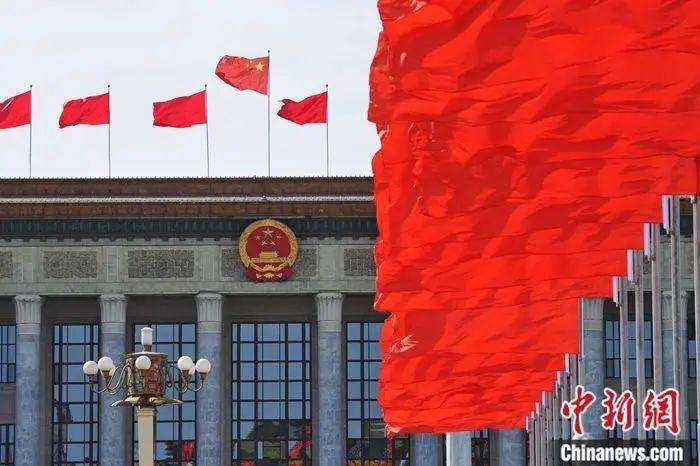
Red flags are fluttering in front of the Great Hall of the People in Beijing. (CNS)
CNS: What are the ideological origins of the Five Principles of Peaceful Coexistence? What kind of traditional Chinese cultural heritage and diplomatic wisdom do they embody?
Zhang Yunling: The Five Principles of “mutual respect for sovereignty and territorial integrity, mutual non-aggression, non-interference in each other's internal affairs, equality and mutual benefit, and peaceful coexistence” align with the ideas of “harmony in diversity”, “harmonious coexistence”, and “win-win cooperation” in traditional Chinese cultural concepts. They also represent the ideals and principles adhered to by People’s Republic of China as a socialist country, symbolizing the wisdom and contributions of Eastern nations, carrying profound significance.
Some argue that human history is essentially a history of war, which brings about immense mutual damage. Peaceful coexistence is not only a concept, an idea, and a kind of philosophy, but also an approach, a method, and a kind of wisdom. To achieve peaceful coexistence among nations, mutual respect is paramount, followed by consultation and cooperation on the premise of equality and mutual benefit, and then the resolution of disputes through peaceful means.
CNS: How has China implemented the Five Principles since 1954?
Zhang Yunling: China is both an advocate and a practitioner of the Five Principles.
China’s implementation of the Five Principles reflects in resolving territorial and border demarcation issues through consultation and negotiation. Suffering from national and ethnic crises in modern times, China was left with numerous historical issues, and the independence of neighboring countries further complicated its external relations. After the founding of People's Republic of China, the country actively promoted border demarcation negotiations, and over several decades, it has basically completed the demarcation of its land borders through peaceful means.
China practices the Five Principles, putting forward the fundamental philosophy of shelving disputes and engaging in cooperation. For some disputes that cannot be resolved immediately, China advocates shelving them to maintain the overall situation of peaceful coexistence and actively engages in cooperation to prevent disputes from impacting the development of other relations. For its neighbors, China has sequentially proposed new concepts such as ensuring a secure and prosperous neighborhood, promoting the principle of “amity, sincerity, mutual benefit, and inclusiveness”, and building a community with a shared future for mankind to jointly create a regional environment of peaceful coexistence and win-win cooperation.
After the end of the Cold War, both the Soviet Union and Eastern Europe underwent dramatic changes, leaving China facing a challenging external environment. In this context, China did not respond to external pressures with confrontation but by actively promoting partnerships. The core of partnership relations is peaceful coexistence and cooperative coexistence, unlike forming cliques or alliances for confrontation. This has broadened China's path, enabling it not only to overcome difficulties but also to achieve new development.
CNS: The current international situation has changed dramatically since 1954. Why should the international community continue to uphold the spirit of the Five Principles?
Zhang Yunling: The current international situation has undergone great changes since 1954. The most notable feature is that the world has entered a period of accelerated evolution in the great changes unseen in a century, where the global structure and power dynamics have undergone major historical transformations, giving rise to new contradictions.
Globally, major structural shifts are underway. The “Global South” has risen collectively, while the influence of the Western world has declined. Simultaneously, the balance of power among major nations has also shifted, prominently reflected between China and the United States. This shift in power has intensified competitiveness and increased disputes, raising the risk of war. In these changing and precarious circumstances, it is particularly crucial to uphold the spirit of the Five Principles, placing peaceful coexistence and harmonious coexistence at the forefront.
Evidently, amidst the changes unseen in a century, where the fates of nations are intertwined, the Five Principles hold new contemporary value. Countries must work together to prevent the escalation of conflicts and the spread of wars, particularly to avert a new world war, and strive to promote a new civilization guided by cooperation. I have repeatedly called for the construction of a new cooperation-oriented civilization in response to the complex international transformations and the shared crisis of climate change, jointly safeguarding a peaceful and sustainable world. (End)
Profile of the Interviewee:

Zhang Yunling received an exclusive interview with CNS. (CNS)
Zhang Yunling is a renowned expert on international issues, academic committeeman of the Chinese Academy of Social Sciences, Chair Professor, Dean of Institute of International Studies, Director of Strategic Advisory Committee of School of Northeast Asian Studies at Shandong University, was awarded the title of National Expert with Outstanding Contribution. Zhang served as the Former Director of the Asia-pacific Institute of the Chinese Academy of Social Sciences as well as the Director of the Department of International Studies. He also held the position of Member of the 10th, 11th and 12th CPPCC National Committee and its Foreign Affairs Committee. He serves as the President of Chinese Association of Asia-Pacific Studies. His major works include Seeking a Positive Interaction between China and the World, The Changing Situation (The World And China), World Trends: Grasping the Pulse of Changes in the New Era.
