共话出海路径海外华媒聚焦成都新都文化魅力
Overseas Chinese Media Explore Xindu’s Cultural Charm and Discuss New Pathways for Chinese Culture Going Global
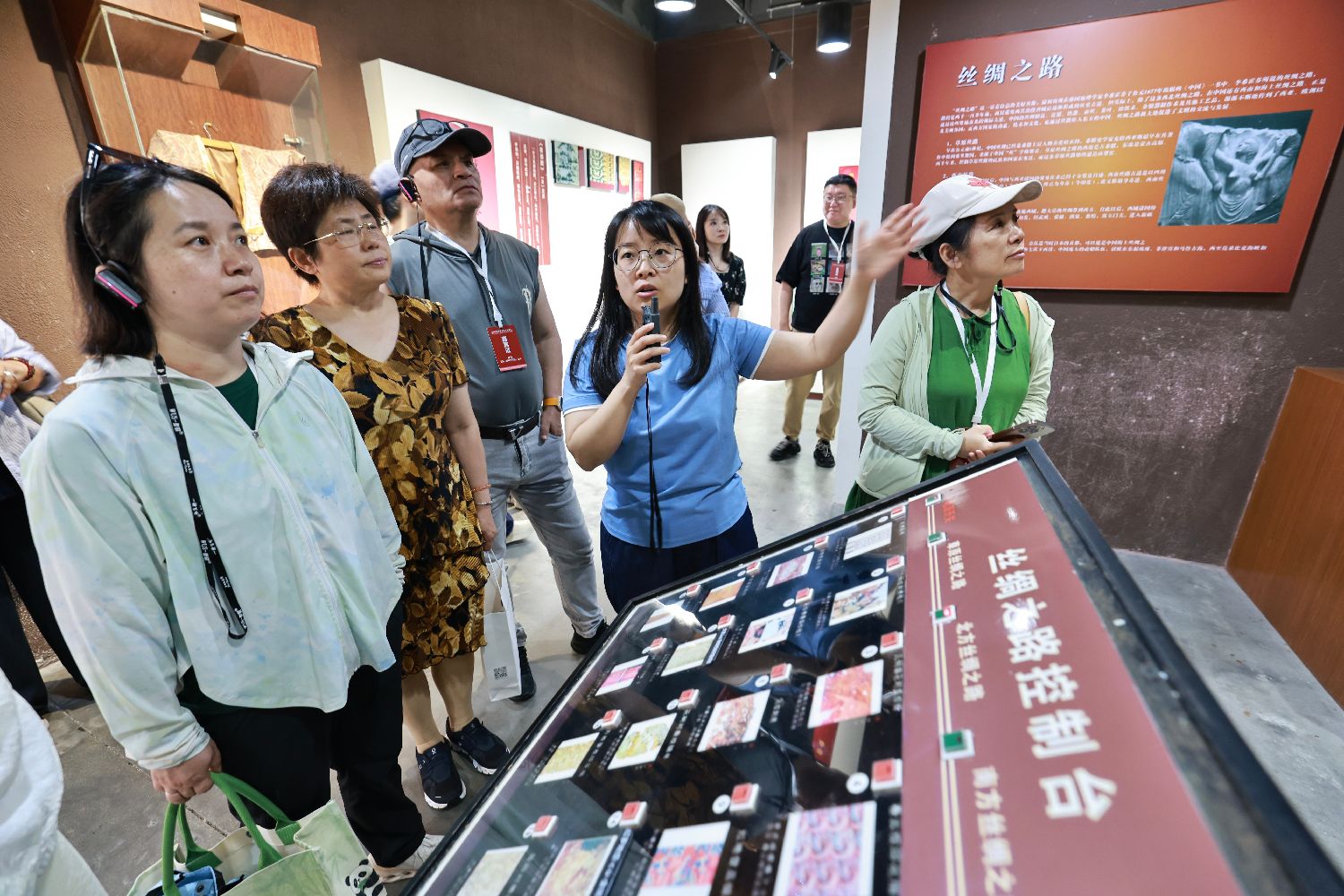
5日,法国《欧洲时报》驻北京办事处副主任戴九悦在位于成都新都的四川丝绸博物馆观看提花织机织造蜀锦时,用镜头记录下这一古老的技艺。“法国有很多奢侈品品牌,但是这里的蜀锦就是东方奢侈品,工艺精湛的蜀锦体现了我们的中式审美。”戴九悦建议,可以在意大利、法国等以时尚为主的国家和城市多推广蜀锦文化。
当日,“2026海外华文媒体川渝行——聚焦成渝地区双城经济圈建设”联合参访活动走进成都市新都区,实地探访素有“南丝绸之路起点”美誉的锦门与明代文豪杨升庵祠及桂湖,沉浸式感受蜀锦蜀绣的文化魅力,在穿越数千年的文脉传承中,共话中华优秀传统文化出海的新路径。
据《华阳国志》记载,新都曾与成都、广都并称“古蜀三都”,拥有近2800年建城史。从“栽桑养蚕”的古蜀先民,到明代状元杨升庵,数千年来文脉绵延不绝。如今,这片土地在传统文化传播上正不断发力,成为中国文化走向世界的一个生动缩影。
坐落于新都的锦门是“南丝绸之路起点”。蜀锦、蜀绣、花楼蜀锦机……漫步于蜀锦蜀绣产业核心发展基地,四川丝绸博物馆里陈列着从蚕桑养殖到织锦工艺的千年演变。早在西汉时期,蜀锦便沿着古丝绸之路走向世界。
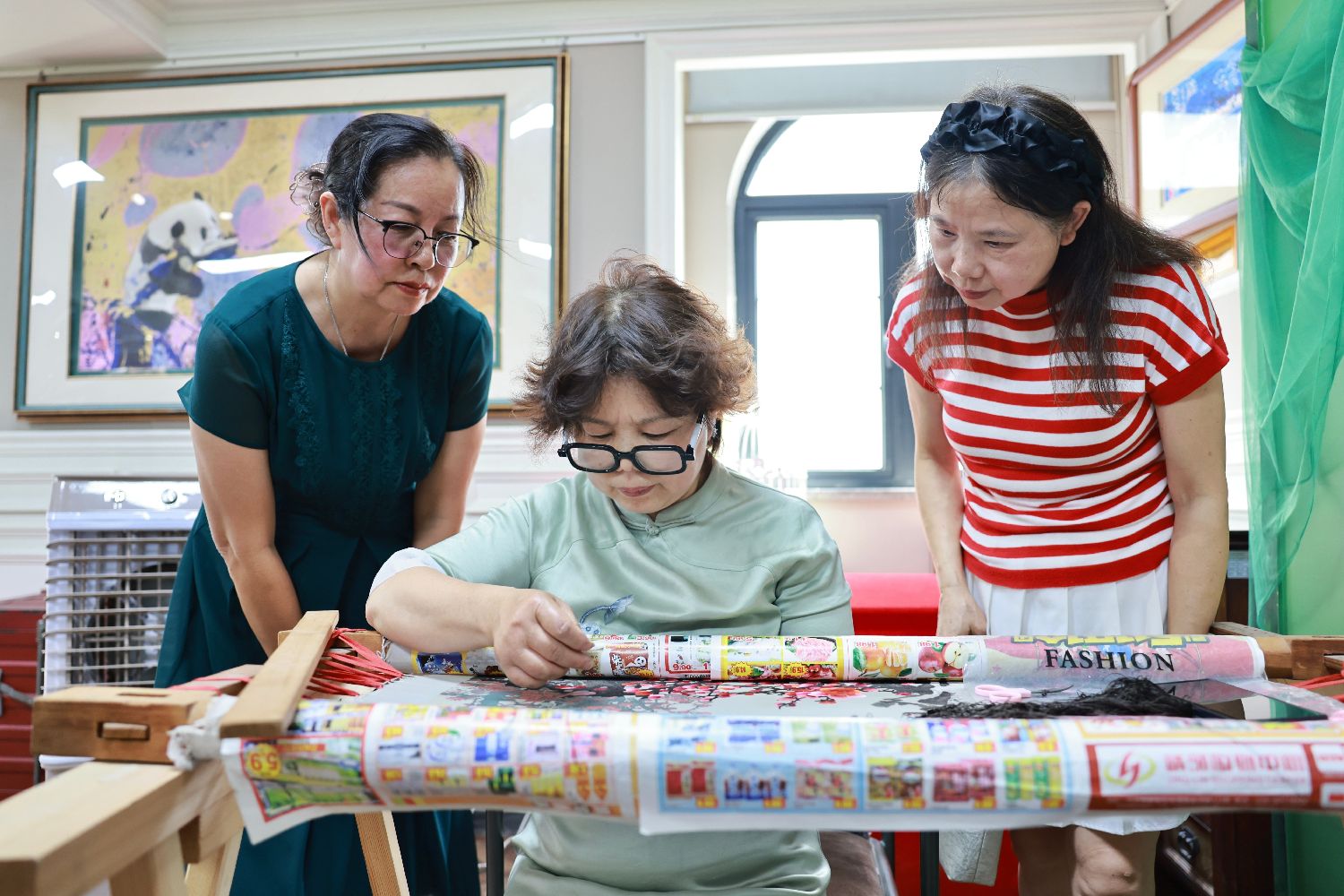
近年来,蜀锦频频出海,成为文化传播的新亮点。“锦门已引入蜀锦、蜀绣、成都漆器等100余个非遗代表性项目,入驻200余名非遗代表性传承人。”锦门景区市场运营负责人刘伟表示,这里不仅是展示窗口,更承担着非遗活态传承的重任。
距离锦门不远的新都杨升庵祠及桂湖园内绽放的荷花吸引了海外华文媒体代表拍照。始建于隋唐的桂湖因明代第一才子杨升庵沿湖广植桂树,写下了《桂湖曲送胡孝思》而得名,是全国重点文物保护单位。在新都杨升庵博物馆社教部主任张晓光的介绍下,嘉宾们详细了解了杨升庵“临利不敢先人,见义不敢后身”的清廉品格与“一门七进士,宰相状元家”的“四重”家风。
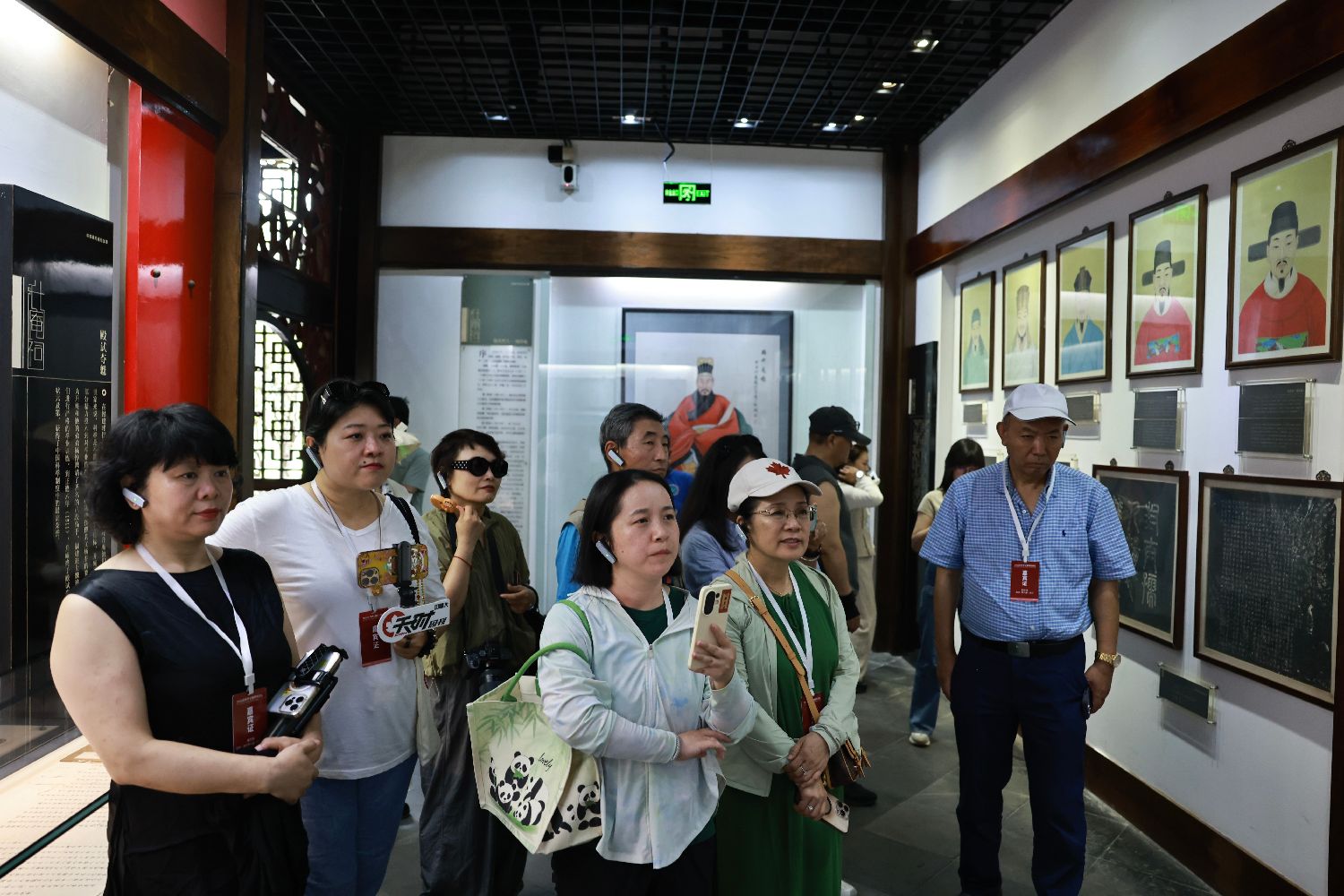
今年,纪录片《杨升庵》在海外的播出是新都推动升庵文化“出海”浓墨重彩的一笔。“该片通过凤凰卫视向全球播出,让升庵文化进入全世界视野。”张晓光表示。
“《杨升庵》纪录片在海外的播出是众多华侨子女了解中华优秀传统文化的一个切口。”首次来到四川的巴西华人网总编辑邵园园认为,杨升庵的“四重”家风蕴含着深厚的家国情怀基因,值得从中汲取精神力量。
新都深厚的传统文化底蕴和面向未来的创新精神,十分适合作为向海外推广中华文化的重要窗口。“我将通过视频报道的形式,把在新都看到的中华优秀传统文化精准传递给华文教育学校。”邵园园希望,能组织更多的华侨子女踏上归乡之旅,亲身感受文化根脉。(完)
On June5,Dai Jiuyue,Deputy Director of the Beijing Bureau of the French newspaperEurope Times,watched Shu Brocade being woven on a traditional jacquard loom at the Sichuan Silk Museum in Xindu,Chengdu.Captivated by the ancient craftsmanship,he documented the process through his camera lens.
“France is home to many luxury brands,but Shu Brocade represents the luxury of the East,”Dai remarked.“Its exquisite craftsmanship embodies the aesthetics of Chinese culture.”He suggested that Shu Brocade culture should be further promoted in fashion-oriented countries and cities such as France and Italy.
On the same day,the“2026Overseas Chinese Media Tour of Sichuan and Chongqing–Focusing on the Development of the Chengdu-Chongqing Twin-City Economic Circle”visited Xindu District in Chengdu.Media representatives explored Jinmen,known as the starting point of the Southern Silk Road,as well as the Yang Sheng’an Memorial Hall and Guihu Lake.Through immersive experiences of Shu Brocade and Shu Embroidery,they gained a deeper appreciation of Sichuan’s rich cultural heritage while discussing innovative approaches to bringing China’s outstanding traditional culture to global audiences.
According to theHuayang Chronicles,Xindu,together with Chengdu and Guangdu,was once known as one of the“Three Capitals of Ancient Shu.”With a history of nearly2,800years,Xindu has nurtured a continuous cultural legacy—from the ancient Shu people who cultivated mulberry trees and raised silkworms,to Yang Sheng’an,the renowned scholar and top imperial examination graduate of the Ming Dynasty.Today,the district continues to strengthen its efforts in cultural promotion,serving as a vivid example of how Chinese culture is reaching the world.
Located in Xindu,Jinmen is recognized as the starting point of the Southern Silk Road.Visitors can find Shu Brocade,Shu Embroidery,and the traditional Hualou brocade loom throughout this cultural hub.At the Sichuan Silk Museum,exhibits trace the thousand-year evolution of sericulture and brocade weaving.As early as the Western Han Dynasty,Shu Brocade was already traveling along the ancient Silk Road to destinations far beyond China.
In recent years,Shu Brocade has increasingly gained international exposure,becoming a new highlight of cultural exchange.“Jinmen has introduced more than100representative intangible cultural heritage projects,including Shu Brocade,Shu Embroidery,and Chengdu lacquerware,while attracting over200inheritors of intangible cultural heritage,”said Liu Wei,Head of Market Operations for the Jinmen Scenic Area.He noted that Jinmen serves not only as a display platform but also as an important center for the living preservation and transmission of traditional culture.
Not far from Jinmen,blooming lotus flowers at the Yang Sheng’an Memorial Hall and Guihu Lake attracted the attention of overseas media representatives,who eagerly stopped to take photographs.Guihu Lake,originally established during the Sui and Tang dynasties,derives its name from the osmanthus trees extensively planted around the lake by Yang Sheng’an,the celebrated scholar of the Ming Dynasty,who also composed the famous poemGuihu Qu Song Hu Xiaosi.The site is now listed as a National Key Cultural Relic Protection Unit.
Under the guidance of Zhang Xiaoguang,Director of the Education Department at the Yang Sheng’an Museum,visitors learned about Yang’s integrity,reflected in his principle of“never seeking personal gain before others,and never shrinking from righteousness.”They also explored the renowned“Fourfold Family Tradition”associated with his distinguished family,famously described as“a family that produced seven jinshi scholars,including both a prime minister and a zhuangyuan.”
This year,the overseas broadcast of the documentaryYang Sheng’anmarked a significant milestone in Xindu’s efforts to promote Sheng’an culture internationally.“The documentary has been broadcast worldwide through Phoenix Television,bringing Sheng’an culture into the global spotlight,”Zhang said.
“The overseas screening of the documentaryYang Sheng’anprovides an important gateway for the children of overseas Chinese communities to learn about China’s outstanding traditional culture,”said Shao Yuanyuan,Editor-in-Chief of the Brazilian Chinese Website,who was visiting Sichuan for the first time.She believes that Yang Sheng’an’s“Fourfold Family Tradition”embodies profound values of family responsibility and patriotism,offering meaningful spiritual inspiration for contemporary audiences.
With its rich cultural heritage and forward-looking spirit of innovation,Xindu is well positioned to serve as an important window for promoting Chinese culture abroad.“Through video reports,I will accurately convey the essence of the outstanding traditional Chinese culture I have witnessed in Xindu to Chinese-language educational institutions overseas,”Shao said.She also expressed hope that more children of overseas Chinese families would have opportunities to visit their ancestral homeland and experience the roots of Chinese civilization firsthand.
(End)
