《遇见政协香港委员何君尧,祝福女同胞节日快乐》
——记人民大会堂的一次情法对话
北京的三月,春寒尚在,但人民大会堂内却是一派热烈的气氛。两会期间,这座庄严的建筑汇聚着来自中国各地乃至世界各地的声音。政治、经济、文化与社会议题在这里交织,每一个身影,都可能承载着一段时代的故事。
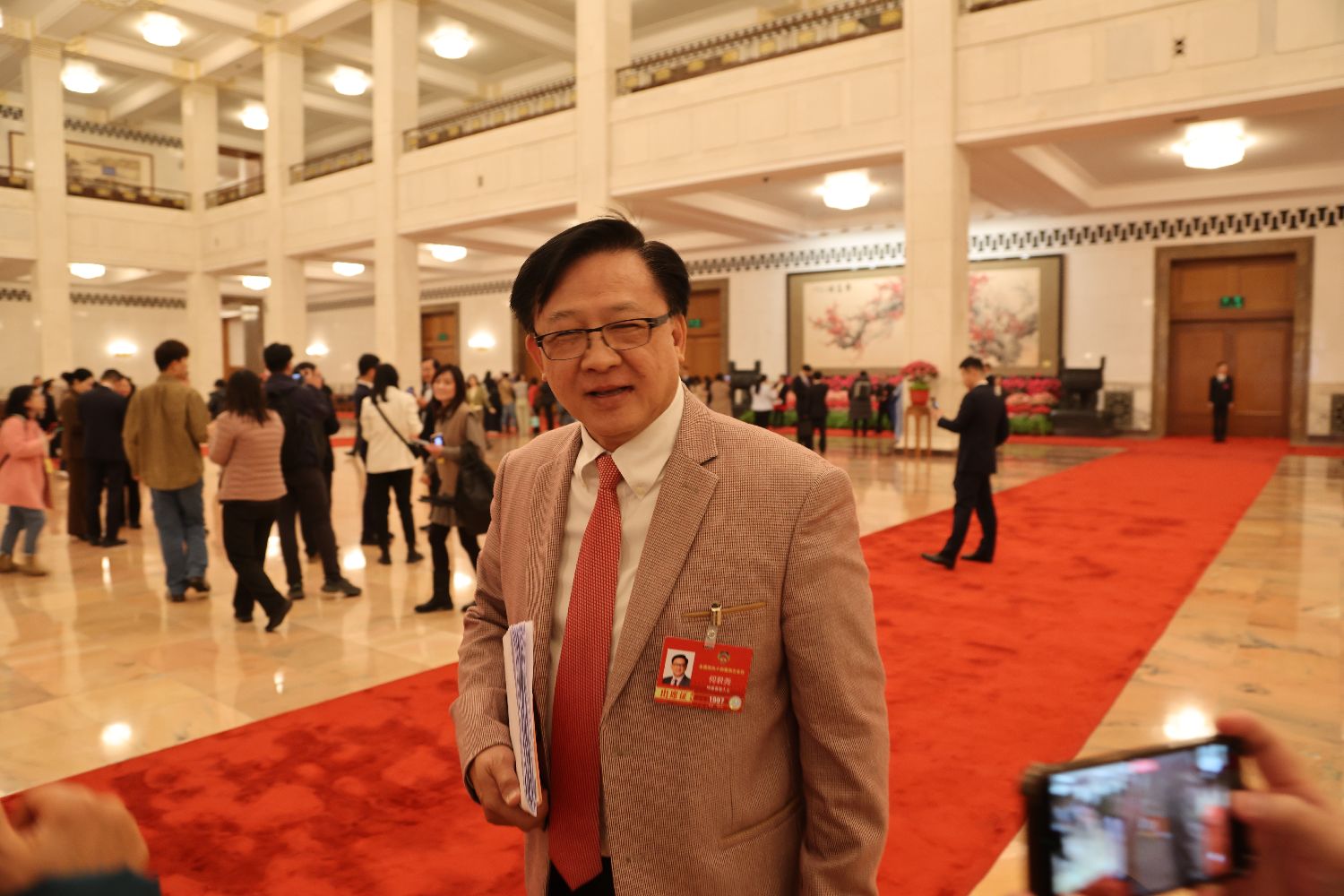
就在这样一个人来人往的大厅里,我采访了全国政协香港委员何君尧先生。
他一身浅色西装,红色领带,胸前佩戴着全国政协委员证件。站在红地毯边的灯光之下,他的神情显得沉稳而坚定。许多人在大厅里匆匆而过,而他却像一位老派的绅士,既有法律人的理性,又带着一种江湖义气般的豪爽。
我走上前去,与他寒暄。
“何先生,久仰。庐江堂何府的名人何大哥。”
他听到这句话,微微一笑。那笑容里既有熟悉的宗族情感,也有一种历经风雨后的从容。
在香港政治风云激荡的这些年里,何君尧这个名字,早已成为一个极具道义却又无法忽视的存在。作为一名执业大律师,他出身法律界,却选择走入公共事务的最前线。
在很多人眼中,他是一个“敢言”的人物。
敢言,意味着承担。
在法治社会中,律师本应是法律秩序的守护者,而在社会剧烈变化的时刻,这种守护往往会变得格外艰难。尤其在香港这样一个高度国际化、又处在复杂历史背景中的城市,法律与政治常常交织在一起。
何君尧正是在这样的环境中,走上了一条不太容易的道路。
从法律人到公共人物,他经历了许多风浪。有人支持他,有人批评他,但无论立场如何,人们都不得不承认一点——他始终站在风口浪尖。
在人民大会堂遇见到他,我感到一种特别的历史感。
这里是中国政治生活的重要象征,而来自香港的法律人,在这里参与国家层面的公共讨论,本身就具有象征意义。
我们简单交谈了几句。
他谈到香港,也谈到法治。
他说,香港的根基始终是法治。无论社会如何变化,法律的稳定性和制度的连续性,是城市能够持续发展的关键。
这一点,其实与北欧社会有着某种相似之处。
在瑞典、挪威或丹麦,人们对法律制度有一种近乎信仰般的信任。法治不仅是一套规则,更是一种社会契约。正因为这种契约存在,社会才能保持长期稳定。
香港过去之所以成功,也正是因为这种制度传统。
而如今,在新的历史阶段,如何在国家发展的大框架下继续保持法治精神,成为许多人关注的问题。
何君尧显然对此有着清醒的思考。
他说,香港既是中国的一部分,也是连接世界的重要窗口。法律制度、商业环境、国际规则,这些都是香港的独特优势。
在我看来,他的角色,某种意义上正是这种“连接”。
一方面,他来自香港的法律体系;另一方面,他又在国家层面的政治结构中发声。
这种双重身份,本身就代表着一种历史过渡。
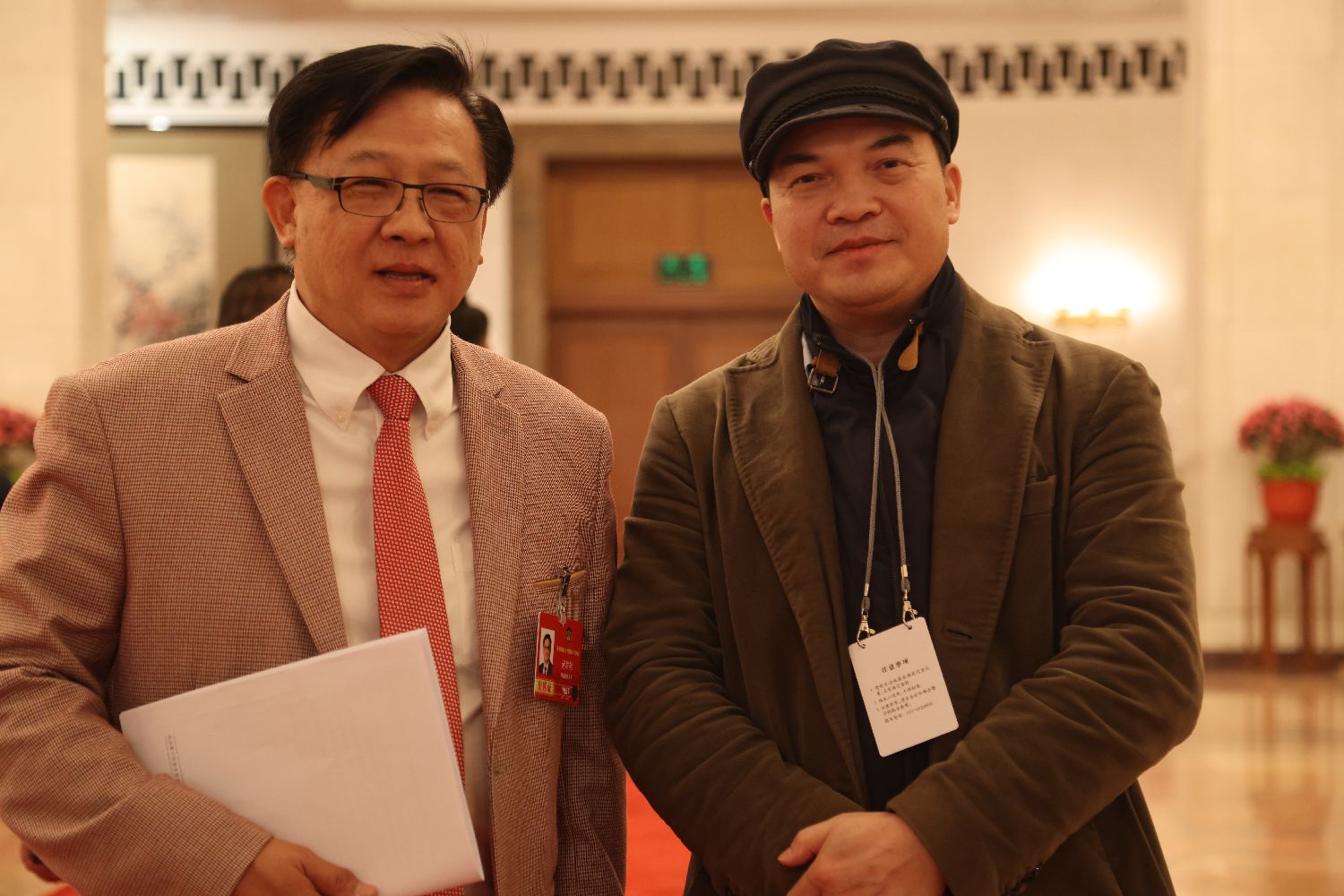
临别时,他特意向全国女同胞们祝福三八妇女节快乐,之后我们在大厅里合影留念。
巨大的穹顶之下,灯光柔和,人群依旧川流不息。红地毯从大厅一直延伸到远处的大门,仿佛象征着一条漫长而厚重的时代之路。
在这条路上,有政治家,有企业家,也有艺术家。
当然,也有律师。
而像何君尧这样的人,或许正是这个时代里最典型的人物——
一个法律人,在时代的风浪中,选择站出来说话。
走出人民大会堂时,夕阳撒在天安门广场显得格外靓丽。
春风微寒。
但在这座古城的灯火之间,我忽然觉得,这个时代最重要的力量,或许仍然是那两个字:
法治。
Meeting 何君堯 (Ho Kwan Yiu)
A Conversation on the Rule of Law at the Great Hall of the People
March in Beijing still carries a lingering chill,yet inside the Great Hall of the People the atmosphere is vibrant and full of energy.During the annual“Two Sessions,”this grand building gathers voices from across China and beyond.Politics,economics,culture,and social issues converge here,and every figure walking through the hall may carry a story of the times.
It was in this bustling setting that I encountered Ho Kwan Yiu.
Dressed in a light-colored suit and a red tie,with his badge as a member of the National Committee of the Chinese People’s Political Consultative Conference pinned to his chest,he stood quietly beside the red carpet.Under the soft lights of the hall,his demeanor appeared calm yet resolute.While many people hurried past,he stood with the composure of a traditional gentleman—possessing both the rational clarity of a legal professional and the straightforward boldness often associated with a man of conviction.
I stepped forward and greeted him.
“Mr.Ho,it’s an honor to meet you.The elder brother of the Ho family from Lujiang Hall.”
Hearing this,he smiled.In that brief smile one could sense both a recognition of shared heritage and the calm confidence of someone who has weathered many storms.
In recent years,amid the intense political debates surrounding Hong Kong,the name Junius Ho has become both controversial and impossible to ignore.Trained as a barrister,he emerged from the legal profession but chose to step into the very center of public affairs.
To many observers,he is known as a man who“speaks his mind.”
And speaking one’s mind inevitably carries responsibility.
In a society governed by the rule of law,lawyers are expected to safeguard legal order.Yet during periods of social turbulence,such a role often becomes extraordinarily challenging.In a city like Hong Kong—highly internationalized and shaped by complex historical circumstances—law and politics frequently intersect.
It was precisely in such an environment that Junius Ho chose a difficult path.
From legal professional to public figure,he has experienced many storms.Some support him,others criticize him.Yet regardless of one’s position,few would deny one fact:he has consistently stood at the center of public debate.
Seeing him again inside the Great Hall of the People gave me a strong sense of history.
This hall is a powerful symbol of China’s political life.And the presence of a legal figure from Hong Kong participating in national-level discussions carries its own symbolic meaning.
We exchanged a few words.
He spoke about Hong Kong,and about the rule of law.
According to him,the foundation of Hong Kong has always been the rule of law.Regardless of social change,the stability of legal institutions and the continuity of legal systems are essential for the long-term prosperity of a city.
In many ways,this idea resonates strongly with the societies of Northern Europe.
In Sweden,Norway,or Denmark,trust in the legal system is almost a civic faith.The rule of law is not merely a set of rules—it is a social contract.Because such a contract exists,society can maintain long-term stability.
Hong Kong’s past success was built upon precisely this institutional tradition.
Now,in a new historical phase,the question of how Hong Kong can maintain its legal spirit while integrating more deeply into the broader national development framework has become a topic of great interest.
Junius Ho clearly has his own reflections on this matter.
He noted that Hong Kong is both a part of China and a bridge connecting the world.Its legal system,business environment,and familiarity with international rules remain unique strengths.
From my perspective,his own role seems to embody this“bridge.”
On the one hand,he comes from Hong Kong’s legal tradition.On the other,he now speaks within China’s national political framework.
This dual identity itself represents a moment of historical transition.
Before we parted,we took a photograph together in the hall.
Under the vast ceiling,the lights glowed softly as people continued to move through the corridors.The red carpet stretched far into the distance,as if symbolizing a long and complex road shaped by the currents of history.
Along this road walk politicians,entrepreneurs,and artists.
And of course,lawyers.
Figures like Junius Ho may well represent a particular type of character in our era—
A legal professional who chooses to speak out amid the storms of history.
When I stepped outside the Great Hall of the People,the Beijing night had deepened.
A cool spring wind moved quietly through the city.
Yet among the lights of the capital,one thought remained clear to me:
Perhaps the most enduring strength of any society still lies in two simple words—
The rule of law.
